Size: x-small
Type: color
Oslo’s Climate Budget 2022
2.3 Climate transformation
2.3.1 Climate transformation in the City of Oslo
The fight against climate change is one of the City Government’s highest priorities. Oslo shall become a zero-emission city which is better to live in and has cleaner air, better public transport and safer routes to school. Oslo is a small city on a global scale, but by working closely with other cities, we can develop solutions which can quickly be adopted by others. The major transformation that will be necessary to become a zero-emission city has been continuing since the current City Government took office in 2015, and many major changes have taken place:
- Road transport in Oslo has declined in recent years, and the remaining road transport is rapidly becoming electrified. This is partly the result of higher parking fees, the removal of several thousand parking spaces, changes to the road toll scheme with more toll stations, two-way toll collection and greater environmentally differentiated rates. One in four vehicles passing the toll ring is now electric.
- By facilitating energy stations which offer charging/refuelling with renewable fuels such as biogas, hydrogen and rapid charging, the City of Oslo can drive the transition to zero emissions amongst the business community, as well as within our own operations. The production of biogas for fuel from food waste and wastewater sludge is part of the transition to a circular economy.
- By using climate criteria in spatial planning, the City of Oslo is laying the foundations for the long-term restructuring of the city, where future housing, transport solutions and businesses are based on low-emission solutions and reduced demand for transport.
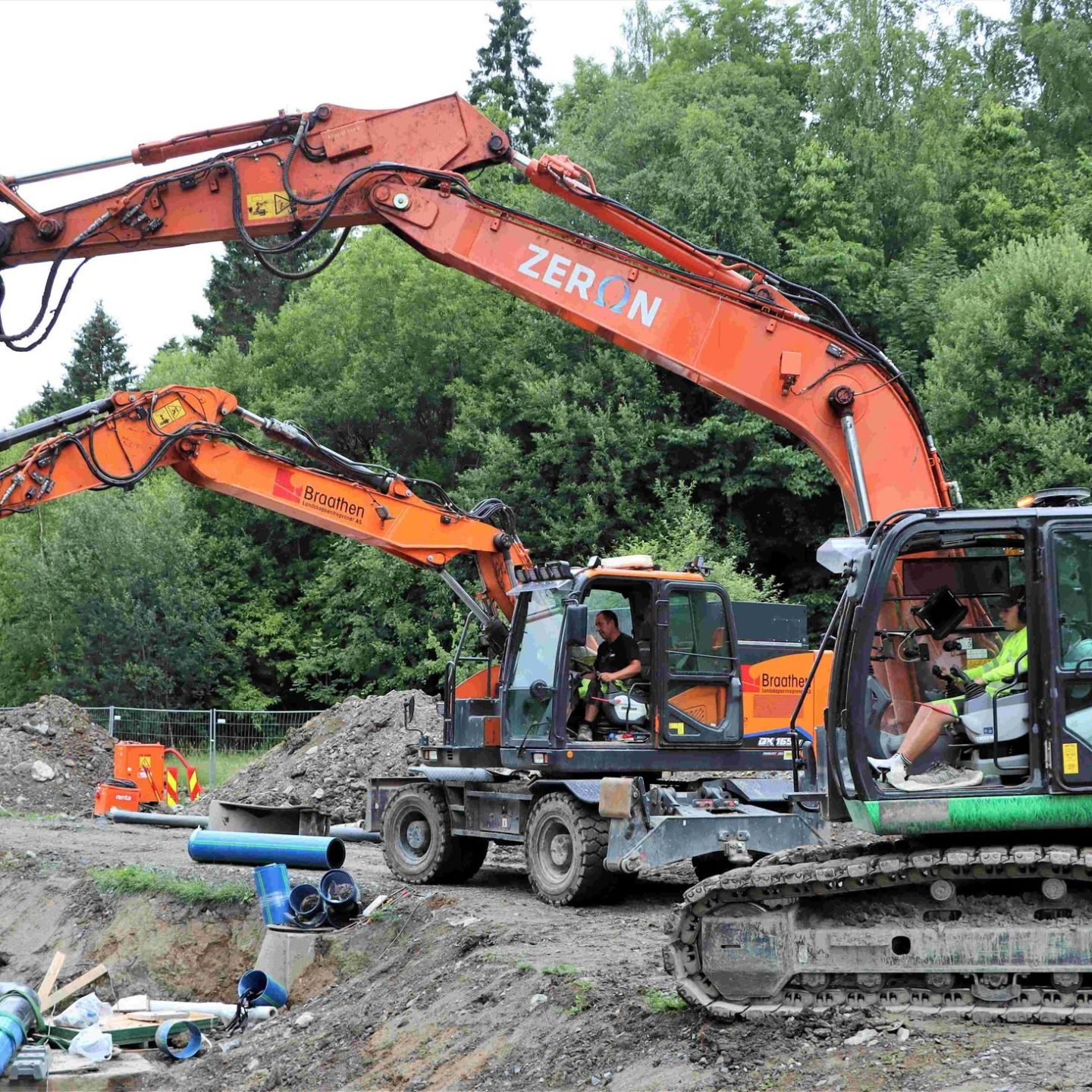
- By setting strict climate requirements regarding the transport of goods and services, the City of Oslo is driving the development of zero-emission transport. Furthermore, Oslo’s own construction sites are fossil-free as a result of the imposition of procurement requirements. This means that the construction machinery that is used in Oslo’s construction projects is powered by biodiesel, biogas, electricity or hydrogen. We are also imposing such requirements on both private and public sector developers. By introducing climate requirements concerning the procurement of construction services and bringing electric wheel loaders and excavators etc. to the market, Oslo is helping to transform an entire industry, first across Norway and subsequently worldwide.
- Until the coronavirus pandemic, public transport’s share of motorised transport had been increasing every year, and more journeys in Oslo have been made by public transport than by car every year since 2016. This is the result of the City Government’s efforts to make public transport services more attractive and efficient. However, inhabitants are also cycling more and more, as a result of the greatly improved cycling facilities, including a much more extensive interlinked cycle path network.
- During the past year, electrification of the van fleet has also increased, with this fleet accounting for 35 % of new car sales in 2021 (as of July). This is a result of measures such as requirements concerning procurements, reserved parking for electric vans, exemption from road tolls, etc. Government support for the purchase of electric vans (Enova) has also been a contributory factor behind this.
- Public transport will be converted to zero-emission operation with the aim of achieving zero-emission ferry and bus operations in Oslo by the end of 2023. During the 2021-2022 winter season, the existing island ferries will be replaced by new electric ferries with greater passenger-carrying capacity. In 2022, a new bus contract began in Oslo South based on 95 % zero-emission operation. Today, all minibuses used by TT-transport in Oslo are powered by either biogas or electric (total of 64 minibuses). Other specialist vehicles (age-friendly transport) are currently powered by fossil diesel (16 buses).
- All international ferries arriving in Oslo now use electricity rather than diesel when docked. The installation of shore supply facilities is planned for container ships, tankers, bulk carriers, car carriers, etc. calling at Sydhavna.
- Fifteen per cent of taxis operated by Oslo Taxis and Norgestaxis (the largest taxi companies in Oslo) are zero-emission, and all taxis in Oslo must be zero-emission by 1 November 2024, as a result of requirements imposed by the municipality. The municipality is providing charging points specifically reserved for taxis, various pilot projects (e.g. wireless charging), and subsidies through the Climate and Energy Fund for home charging for taxi drivers.
- 87 % of the municipality’s own vehicle fleet is zero-emission or runs on sustainable renewable fuel. Few other municipalities or government agencies even come close to having such a high proportion.
- Oslo is working to develop a completely new and innovative approach to waste management involving carbon capture during waste incineration. This could be the start of a new industrial chapter, bring new green jobs to Oslo, and help solve a major environmental problem facing the world. There are 500 waste incineration plants across Europe alone to which the technology could be exported.
- The 2021 climate survey shows that there is broad support amongst the population for the city’s climate strategy and targets. 68 % of Oslo’s inhabitants support the overall target of a 95 % reduction in GHG emissions by 2030, and 57 % believe that the efforts being made to achieve the climate targets are making the city a better place to live in.
2.3.2 The role of the business community in achieving Oslo’s climate targets
The business community in Oslo must adapt if Oslo is to achieve the climate targets, but it can also help to accelerate the transition to zero-emission solutions. In particular, Oslo’s business community can influence emissions by investing in zero-emission transport, developing solutions based on a circular economy, and establishing requirements for suppliers. The finance industry can contribute to the climate transformation through investment strategies based on sound climate risk assessments.
According to the 2021 climate survey, 82 % of businesses believe it is important for them to be seen as climate and environmentally friendly by their customers, an increase of eight percentage points over the previous year. This trend is also reflected in the proportion of businesses preparing an emission inventory, with the proportion preparing such an inventory rising from 12 % to 18 % in two years, according to the same survey.
A number of major companies have taken on the role of leader in the Green Shift and demanded stronger climate action from the national authorities through the Skift – Næringslivets klimaledere (Skift – Business Climate Leaders) climate network. The City of Oslo has a productive dialogue with pioneer businesses through its own Næring for klima (Business for climate) network, with 130 member businesses from across a wide range of sectors. In this network, specialists from member companies and the municipality discuss measures and solutions in four areas: Goods and service transport vehicles, construction and real property, waste and circular solutions and climate adaptation.
Leading players are also visible at the forefront of the cityscape in Oslo. Adjacent to the European route E18 at Filipstad, the Norwegian postal service (Posten) and DHL have established their own City Hubs next to DB Schenker’s hub which dates from 2019, and are now able to distribute goods from there using cargo bikes and electric vans. The transport industry is also starting to use trucks powered by electricity or biogas. As of July 2021, 7 % of new trucks in Oslo were electric. Alongside their low operating costs, climate requirements concerning the municipality’s procurements and the road toll payment system are a key reason why businesses are purchasing such vehicles.
Many businesses have also announced tighter climate requirements for procurements, and a small number are also demanding climate neutrality from their suppliers. However, the 2021 climate survey shows that the proportion of companies imposing climate requirements on their suppliers is not increasing overall, but has remained stable at 53 % for several years. An increase in the proportion of businesses imposing stricter climate requirements on their suppliers will be an important contribution from the business community to the attainment of Oslo’s climate targets through to 2030.
The transition to a more circular economy will help to reduce both direct emissions from waste incineration and indirect emissions in Oslo. An increase in demand for reused and recycled materials is a prerequisite. For example, in the business community, soft drinks producers such as Coca Cola and Ringnes have switched to manufacturing soft drinks bottles from recycled plastic. In the construction industry, the recycling of construction materials has increasingly come into focus. In 2021, Entra completed an office building at Kristian Augusts gate 13 made from 80 % recycled materials, reducing GHG emissions generated by material use by 70 %. Many start-up enterprises are demonstrating that transformation is possible through the adoption of green business models and circular solutions.
The transformation necessary to achieve Oslo’s climate targets is comprehensive. Despite many good climate measures and examples of future-oriented solutions and businesses amongst Oslo’s business community, the solutions still need to be disseminated on a large scale, and even more businesses must take the steps that are needed. The operators who have progressed furthest in re-aligning their strategy and taken the lead in introducing new solutions will be best equipped to retain access to markets and capital as climate regulations imposed by the EU, greater weighting of climate risk in the finance sector and stricter climate requirements for procurements are escalated over the coming years.
2.3.3 The role of the central government in achieving Oslo’s climate targets
In January 2021, the Norwegian government presented the Climate plan for 2021-2030 (Report to the Storting No. 13 (2020-2021)). The two key points as far as Oslo is concerned are that provision is being made for a pilot project with zero-emission zones in two major Norwegian cities (Oslo and Bergen), and that the Norwegian government is intending to increase the carbon tax to NOK 2,000 per tonne in 2030. According to Norway’s report to the UN Framework Convention on Climate Change, carbon tax is the single instrument that has resulted in the largest national emission reductions since 1990. However, it is unclear what reductions the increase in the tax in 2030 will lead to, if the increase in the tax is compensated by reductions in other taxes. For example, if compensation is given in the form of a reduction in road use tax, the impact of the carbon tax will be eliminated as regards road transport. The Storting has also not adopted an escalation plan for carbon tax, so it is unclear when any increase will actually be introduced.
Proposals that could have a positive impact for Oslo include the development of integrated infrastructure for zero- and low-emission vehicles, the facilitation of support schemes for the establishment of essential infrastructure for realising technologies within passenger and freight transport, the scope to carry out pilot trials with zero-emission zones, and the introduction of carbon tax on waste incineration.
The Norwegian government has also introduced a scheme which means that biofuels which are used over and above the sales requirement will not have a climate impact. When a customer buys 100 % biofuel, the seller will then be able to sell correspondingly more fossil fuels to another customer, so that the climate impact is offset on a litre-for-litre basis. Oslo will continue to work towards a national, government agency-run system which will ensure a climate impact from biofuels which are used over and above the minimum level in the sales requirement. If such a system is not put in place, the City Government will be forced to consider moving away from requirements concerning biofuels in procurements. If this becomes a reality, the City Government’s target for emission reductions in 2023 will become even more challenging to achieve.
In June 2021, the Storting adopted a new National Transport Plan 2022-2033 (NTP). In a densely populated metropolitan area like Oslo, a high-capacity, efficient public transport network is essential in order for the population to get about and thrive in their everyday lives. The key measures for Oslo are the Fornebu Line, a new signalling system for Oslo Metro, a new city centre tunnel, and a new high-capacity station at Majorstua. Through the urban growth agreement, the central government has committed to co-financing the Fornebu Line and a new city centre tunnel for Oslo Metro. In the 2022-2025 action programme for the urban growth partnership and Oslo Package 3, funding was allocated for the planning of Majorstua Station, but not the actual construction. In the NTP, NOK 500 million has been set aside for a new Majorstuen station during the first period. The key public transport projects for Oslo are underfunded. In order to achieve the various targets regarding the climate and traffic reductions, it will be necessary to prioritise investments and the operation of public transport, and to deprioritise investments in roads which generate traffic growth. Parallel to this, it will also be necessary to work to ensure that revenues from the road toll ring and central government funding for major public transport projects both increase.
2.3.4 Oslo’s international climate engagement
Global climate and environmental targets require efforts to be made at local, national and international level. Cities are pivotal to the climate transformation that will be necessary if the world is to achieve the goals agreed in the Paris Agreement.
By participating in international climate networks for cities, Oslo is contributing to the sharing of experiences and the exporting of climate solutions. By participating as an innovator city in the C40 network, through Eurocities, Carbon neutral Cities Alliance (CNCA) and Local Governments for Sustainability (ICLEI), Oslo is helping to grow markets for new climate solutions and drive better national and international framework conditions for the implementation of climate initiatives.
Given that Norway has an agreement to implement the climate target for 2030 in cooperation with the EU, the EU’s climate policy becomes even more important as a framework than was previously the case. Oslo is therefore actively working to influence the EU’s major climate package «Fit for 55», which was presented in July 2021, both through Eurocities and through input to the Norwegian government.
Oslo’s experiences and results are in great demand internationally. In autumn 2020, an Oslo office was established under the C40 climate network to further develop climate solutions in areas where Oslo is a leading player. The key focus areas for the office are zero-emission buildings and construction sites, climate leadership and climate budgets.