Size: large
Type: image
The updated requirements mark a clear shift in Oslo’s climate policy: where construction sites were previously required to be fossil-free, they must now be fully emission-free whenever possible.

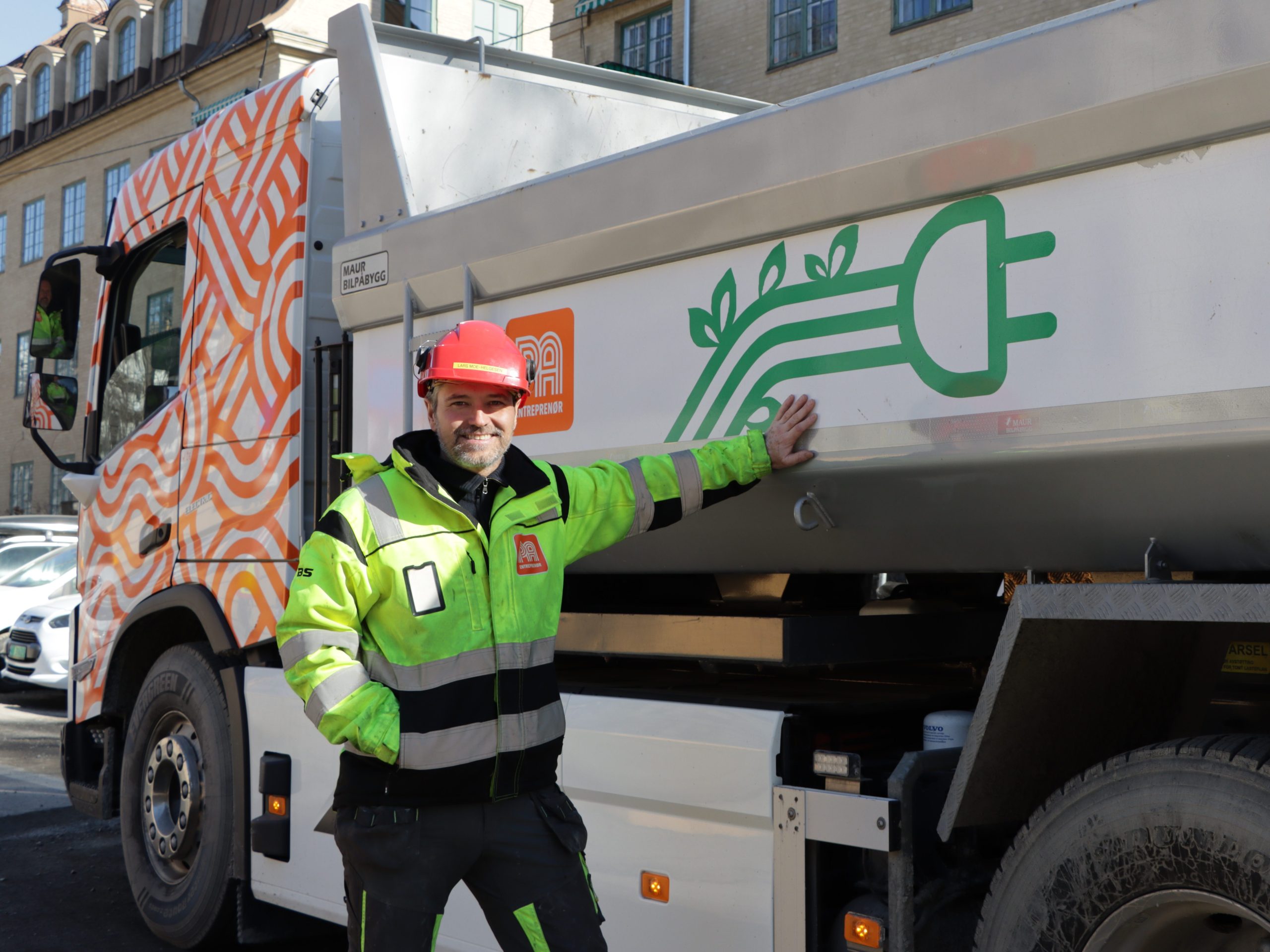
Lars Fredrik Moe-Helgesen is at the wheel when it comes to electric trucks.
Electric Machines Become the New Standard
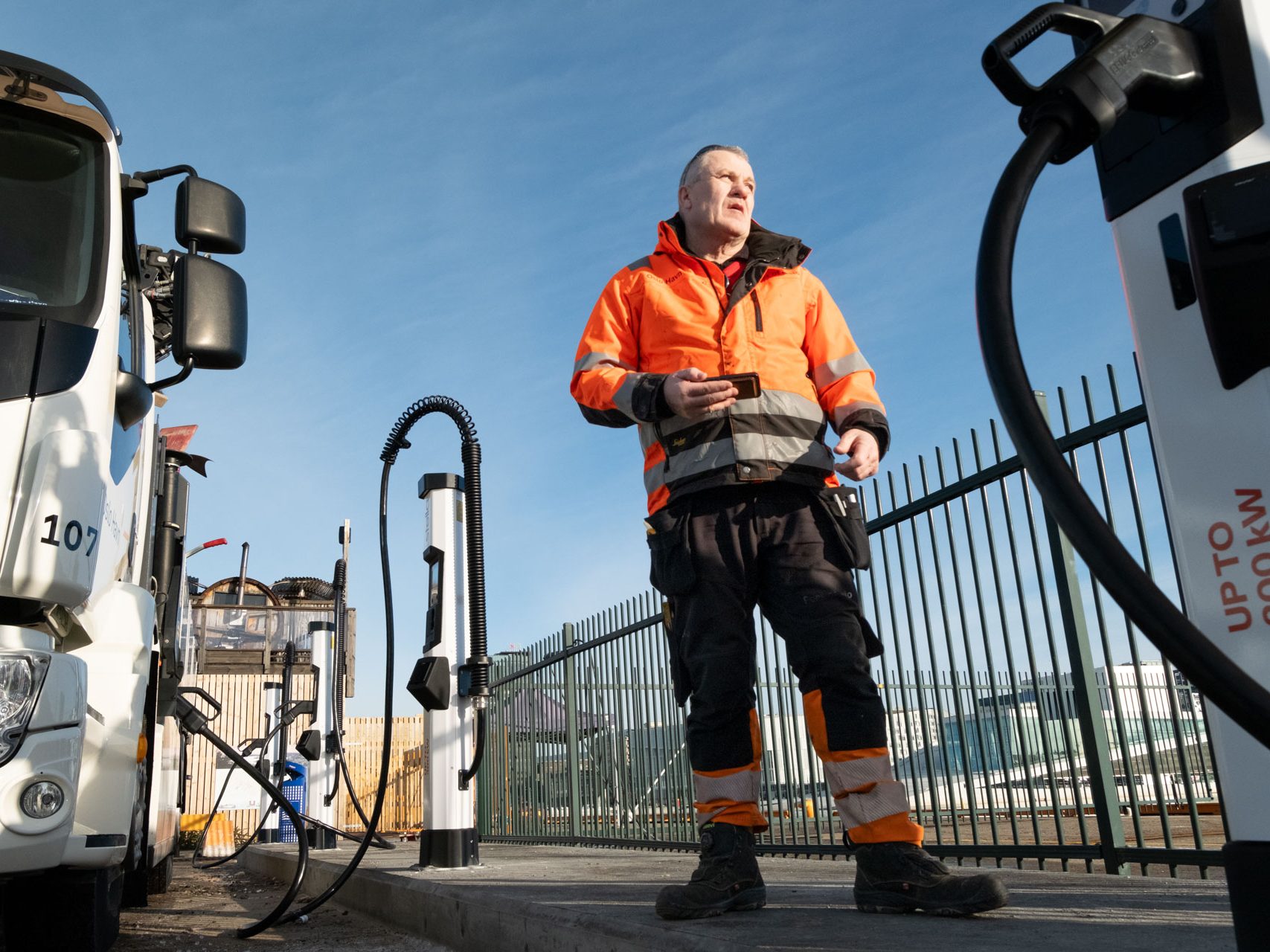
At a construction site in Gabels gate in central Oslo, electric excavators and trucks are already doing the job. Here, PA Entreprenør AS is replacing water and sewer pipes for the municipality using zero-emission equipment.
“We’ve been pushing for this change,” says Lars Fredrik Moe-Helgesen, Managing Director of PA Entreprenør AS. “Small and medium-sized contractors like us were early adopters of electric machinery. Now the entire industry has to make the transition.”
Under the new rules, contractors must use emission-free machines and vehicles to carry out municipal projects. In tender competitions, electric trucks are ranked higher than trucks running on biogas, giving zero-emission solutions a clear advantage.


From Fossil-Free to Emission-Free
Oslo first introduced standard climate and environmental requirements for construction sites in 2019. Since then, the market for electric construction machinery and heavy vehicles has developed rapidly, making stricter requirements both realistic and effective.
Where emission-free solutions are not available or feasible, sustainable biodiesel may be used. Fossil fuels are no longer permitted. For mass transport, biogas is the minimum requirement, but emission-free solutions are rewarded.
For Moe-Helgesen, the changes bring long-awaited predictability.
“We invested early in electric trucks and charging infrastructure. If electric trucks hadn’t been prioritised, it would have been a poor business decision. Now, those who invest in zero-emission solutions are rewarded with contracts,” he says.
- A contract requirement that all work on the construction site must be emission-free.
- A minimum requirement for biogas in mass transport with a reward for emission-free mass transport so that these have an advantage in competition.
- Requirements for other transport with emission-free or biogas-based vehicles for vehicles under 3.5 tonnes and minimum fossil-free vehicles for vehicles over 3.5 tonnes. From 2027, there will be requirements for emission-free or biogas vehicles for all vehicles.
A Powerful Tool for Cutting Emissions
Construction activity accounts for a significant share of Oslo’s greenhouse gas emissions, and the municipality is the city’s largest builder. Using procurement requirements to drive change is therefore a key climate tool.
The strengthened requirements will help Oslo reach its goal of cutting greenhouse gas emissions by 95 percent by 2030.
“Oslo is well on its way to fully emission-free construction,” says Marit Kathrine Hepsøe, who is responsible for sustainable construction sites at the City of Oslo’s Agency for Development and Competence.
“In 2024, as much as 85 percent of energy use from construction machinery on municipal sites was emission-free.”

Marit Kathrine Hepsøe
Creating a Market for Zero-Emission Machinery
According to the city, clear and predictable requirements are essential to accelerating the mass production of electric construction machines and vehicles.
“When demand is high, innovation follows,” says Hepsøe. “Requiring electric solutions drives technological development and makes better machines available faster.”
Moe-Helgesen agrees. “The more contractors that demand emission-free equipment, the better the machines will become.”

An electric asphalt cutter in Gabels gate.
No More Fossil Fueled Vans on Construction Sites
The new requirements also mean an end to fossil-fuel vans delivering goods and services to municipal construction sites. From 2027, all trucks must be either emission-free or run on biogas.
Oslo now encourages national authorities and private developers to follow suit.
“The market has shown that climate requirements work,” says Hepsøe. “Now we want the state and private sector to adopt similar standards, so that all construction sites in Oslo can become emission-free as quickly as possible.”
This story was originally published in Norwegian in March, 2025