Size: large
Type: image
– The climate budget has helped put Oslo on track to cut emissions by 70 percent under current policies. This is because we now have tools that make it easier to prioritise climate considerations in decisions throughout the year, says Hallstein Bjercke, Vice Mayor for Finance. When we see that measures are not being implemented quickly enough or are not having the desired effect, the climate budget allows us to adjust course along the way.
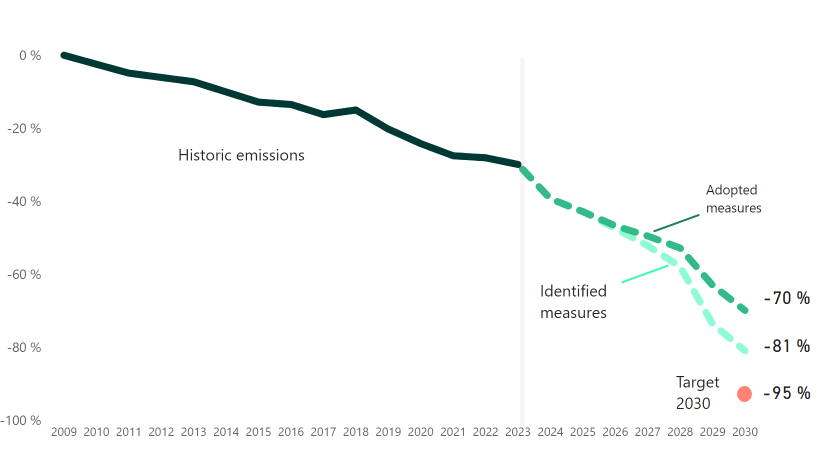
The Climate Budget 2026 shows that emissions can be reduced by 70 percent by 2030 compared with 2009 levels, based on adopted measures. Figure: Climate Agency.
World's first Climate Budget
In 2016, Oslo became the first city in the world to launch a climate budget. The goal at the time was to provide an overview of the municipality’s efforts to achieve a 95 percent reduction in emissions by 2030.
Since then, the climate budget has developed into a detailed and binding governance tool for achieving Oslo’s five climate goals. It has evolved from a tool focused on emissions within the city boundaries to a comprehensive plan for how Oslo can reduce its total climate footprint and prepare for climate change. The climate budget has created a systemic change in Oslo’s climate initiatives and is something other cities draw inspiration from.
The City Government presents the climate budget proposition and assigns responsibility for measures to municipal agencies, before the City Council makes the final decision.
– The climate budget gives us a comprehensive overview of where we stand and where we are heading. It makes it easier to hold both agencies and politicians accountable and shows to what extent the measures actually deliver results, says Hallstein Bjercke, Vice Mayor for Finance.
– The climate budget is important for Oslo because it has helped systematise efforts to cut emissions in a simple and understandable way. Everyone knows who is responsible for what, how we are performing compared with our goals, and where we need to step up our efforts. But perhaps even more importantly, Oslo’s climate budget has taken on a life of its own. Cities all over the world are copying us. That means emission cuts many times greater than what Oslo can achieve on its own, says Marit Kristine Vea, Vice Mayor for the Environment and Transport.
Oslo’s five climate goals
Oslo has five climate goals covering direct emissions, indirect emissions, energy, climate adaptation and natural carbon storage.
A complete governance system for the municipality’s climate goals
The climate budget is an integrated part of the municipality’s ordinary budget process and follows the same annual cycle as the fiscal budget. This means that climate efforts are embedded as guiding principles in all municipal budget documents, and that climate measures are reported on alongside financial reporting.
You can read more about how climate is integrated into the budget here: Climate Budgeting process.
Through the climate budget, the entire municipality is made responsible for climate action. Responsibility for implementing climate measures is assigned to municipal agencies and linked to city government departments and dedicated budget funding. This has made climate action a core task for the whole municipality.
– The climate budget has given us a clear overview, ownership and direction in our climate initiatives. It is exciting to look back at the development of the climate budget over the past ten years and everything we have achieved together as a municipality, says Audun Garberg, Head of the Climate Department in the Climate Agency of Oslo. The Climate Agency is responsible for the the technical and analytical foundation of the climate budget and acts as an advisor and driving force for implementation of the measures across the municipality.
You can read more here about how the municipality uses the climate budget as a governance tool.
The most important measures to reach Oslo’s climate goals:
- Electrification of heavy transport has been one of Oslo’s most important climate measures. Road transport accounts for more than 40 percent of the city’s greenhouse gas emissions, and heavy transport alone makes up more than 30 percent of this. Through support schemes, procurement requirements and the expansion of charging infrastructure, the share of zero-emission and biogas-powered trucks has increased significantly in recent years. In 2023, more than 30 percent of newly registered heavy vehicles in Oslo were electric or powered by biogas – compared with under 10 percent nationwide.
- The construction sector accounted for nearly 14 percent of the city’s total greenhouse gas emissions in 2023. To cut these emissions, the municipality has introduced requirements that all municipal construction sites must be zero-emission from 2025. Practical guidance and support schemes for electric machinery and charging infrastructure have also been developed. Oslo is likely the first city in the world to make zero-emission construction sites the standard in public projects, helping shift the entire industry in a more climate-friendly direction.
- The carbon capture facility at Klemetsrud is one of the most powerful climate measures launched in Oslo. When fully operational, the facility will have the capacity to capture up to 350,000 tons of CO₂. About half of this will be fossil CO₂. It will be one of the world’s first full-scale facilities of its kind and a crucial measure to cut emissions where few other alternatives exist. The facility is part of the national Longship project and makes Oslo a pioneer in the use of carbon capture at urban emission sources.
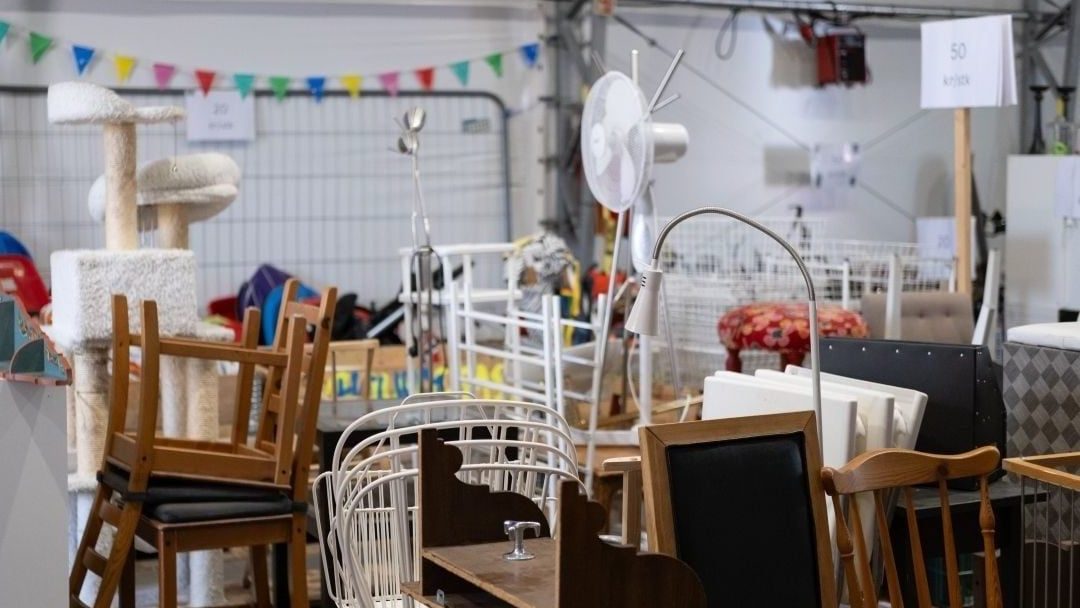
- Reduced emissions from municipal consumption of ICT products, furniture and fittings, food, textiles and single-use plastic items. Oslo municipality procures goods worth more than NOK 30 billion each year. By reducing consumption, avoiding waste and demanding more climate friendly alternatives, the municipality can save money, cut global emissions and stimulate demand for more circular goods and services.
- Sharing solutions and joint fleet management systems for municipal vehicles and machinery. The municipality should not own more vehicles and machinery than strictly necessary. Smart solutions can reduce the size of the fleet over time.
- Communication to encourage changed consumption behaviour and a more circular society in Oslo. Climate communication is about making climate-friendly choices attractive and more natural. The ambition is to influence behaviour, for example by encouraging repair instead of replacement, buying second-hand, or eating more plant-based food. Communication is the most important instrument here.
- Reduced emissions from construction materials in the municipality’s own projects. Oslo has a large construction portfolio and significant material consumption. By choosing solutions that require less material use and by using more climate-friendly materials, emissions can be reduced, and the construction sector can become more circular.
- Energy efficiency in Oslo’s buildings
In Oslo, 75 percent of all energy use goes to buildings, much of it for heating and hot water. At the same time, more than half of energy-rated buildings have the lowest energy ratings, F and G. There is therefore great potential to reduce energy use in the city’s building stock. Through the climate budget, Oslo has instruments to reduce energy use in its own buildings and provides grants to housing cooperatives and condominiums to upgrade older windows nd external doors that leak energy. The municipality also works to reduce energy use in water and wastewater systems and in street and park lighting. - Smarter and moreflexible energy use
To reach the climate goal, heavy transport, construction sites and port activities in Oslo must be electrified, among other measures. A robust, flexible and zero-emission energy system is essential for Oslo to reduce greenhouse gas emissions by 95 percent by 2030 compared with 2009 and become a zero-emission city. Energy must be used more efficiently to reduce peak demand. This is done by piloting flexible energy use, offering municipal energy and capacity into flexibility markets, and exploring smart energy management to reduce peak loads. The municipality also provides grants for participation in flexibility markets for commercial buildings. - Increased local energy production
Oslo has many grey areas – roofs, façades and parking areas – where electricity can be produced close to consumption without putting pressure on nature. By utilising solar power on rooftops and façades, the city can become less vulnerable during periods of high electricity demand. Solar energy is therefore considered for all new municipal buildings, and grants are provided to housing cooperatives, condominiums and commercial buildings that install solar panels on their roofs.
Stormwater management
- Intense rainfall has already caused significant damage in Oslo, and the impacts of stormwater are expected to increase in the coming years. The municipality has begun planning a main floodway and retention network to better manage extreme precipitation events.
- Continuous work is underway to establish new green spaces that can delay and retain stormwater. The wastewater system is also being improved by separating stormwater and wastewater in areas with combined systems, reducing the risk of flooding and basement backflow during heavy rainfall.
Climate-resilient nature and natural carbon storage
- Oslo manages its forests to both protect nature and withstand climate change. Gentle harvesting is used, and drought-stressed spruce is replaced with pine and deciduous trees that are better suited to a warmer, drier climate. This makes forests more resilient to drought and fire, increases carbon storage in soils and improves water retention.
- Land-use neutrality is important for climate adaptation, carbon storage and biodiversity. Development of natural areas should be avoided by reusing grey areas, and where nature must be developed, this should be offset by restoring other areas so that total land use does not increase.
The world looks to Oslo
Oslo’s approach has attracted attention nationally and internationally. Several Norwegian municipalities have developed their own climate budgets, and in recent years cities such as London, New York, Mumbai and Rio de Janeiro have adopted the tool based on Oslo’s model. In 2025, the C40 climate network announced that climate budgeting would become part of its leadership criteria, with the goal that all cities have a climate budget by 2030. In 2022, the Director of the Climate Agency, Heidi Sørensen, was invited to present Oslo’s climate work and climate budget in a TED Talk, sharing five key lessons for successful climate action.
The IPCC comes to Oslo to learn about climate budgeting
On 12 January 2026, an international conference on climate budgeting and climate leadership will be held in Oslo. Leaders from the IPCC and the C40 network will participate alongside representatives from major cities and expert communities worldwide. The goal is to share experiences, discuss how climate budgeting can become a global governance tool, and set direction for cities’ climate efforts towards 2030. The event marks ten years of climate budgeting in Oslo and shows how the city has gone from pioneer to global driver.
In addition, IPCC leadership and authors will meet to continue work on the special report on climate change and cities.

Together with C40, Oslo took part in the launch of a two-year pilot programme in 2021 involving 12 cities from five global regions. The aim was to help them get started with their own climate budgets. Cities participating in the pilot were Barcelona, Berlin, London, Los Angeles, Milan, Montréal, Mumbai, New York, Oslo, Stockholm, Paris, Rio de Janeiro and Tshwane.
– It is exciting that cities all over the world look to Oslo when developing their own climate budgets. It shows that what we do here has global ripple effects and that we can lead and inspire others. At the same time, it motivates us to further develop the tool and continue sharing our experiences, says Heidi Sørensen.
In 2024, Oslo municipality was a finalist for the prestigious WRI – World Resources Institute Ross Center Prize for Cities for its work on climate budgeting. WRI highlighted Oslo as a pioneer in climate budgeting, noting that the process is unique in integrating climate considerations across sectors. The prize money is used to spread climate budgeting as a method to more cities, and the new digital platform is one of the results.
Guide to climate budgeting
As part of its knowledge sharing, Oslo municipality developed a guide to climate budgeting as a governance tool in cooperation with the municipalities of Hamar and Trondheim. Launched in 2021, the guide provides a practical introduction to how municipalities and counties can design their own climate budgets – from setting clear climate goals to linking measures with responsible agencies, financial frameworks and reporting.
The aim is to make it easier for more authorities to adopt the method and strengthen climate action through systematic governance and follow-up.
The guide can be found in English here.




The remaining gap
The current climate budget shows not only what emission reductions are possible under current policies, but also how far the municipality still must go to reach its goals. The Climate budget analysis makes it possible to assess whether Oslo is on track and how much each measure contributes. This provides a solid basis for identifying new measures and tightening efforts where needed.
As of 2025, analyses point to around a 70 percent reduction by 2030 with measures already adopted. If identified measures are also approved and implemented, reductions could reach 81 percent. Since the target is 95 percent, a gap remains that must be closed.
– The overview provided by the climate budget analysis creates both professional and political space to take new steps and identify the right measures to cut emissions, says Garberg.
Development of the Climate Budget
Initially, the climate budget was an overview of emissions within the city boundaries and measuers to reduce them, focusing mainly on oil heating, road traffic, waste incineration and construction.
Over time, more sectors and themes were included.
Today, the climate budget covers all five of Oslo’s climate goals: direct emissions, circular economy/indirect emissions, energy, climate adaptation and natural carbon storage.
2016 – Climate Budget 2017, the world’s first climate budget, adopted by the City Council.
2017 – Focus mainly on emissions in Oslo; phasing out oil heating was the largest measure.
2018 – 25,000 paid parking spaces converted to residential parking; 1,100 city-centre spaces removed.
2019 – World’s first zero-emission construction site realised in Olav Vs gate; standard climate requirements introduced.
2020 – Oslo’s Climate Strategy towards 2030 adopted; five climate goals established.
2020 – Regulation introduced requiring all taxis to be zero-emission from November 2024.
2021 – National guide to climate budgeting developed; one-third of Norwegian municipalities presented climate budgets.
2021 – C40 launched a global pilot for climate budgeting.
2023 – Goal adopted for a 30 percent reduction in emissions from materials in municipal construction projects.
2023 – Indirect emissions and energy included in the climate budget.
2024 – Climate adaptation and natural carbon storage included.
2025 – Public transport largely zero-emission; final investment decision for carbon capture at Klemetsrud secured.
2025 – Requirements for zero-emission machinery and transport in municipal procurement take effect.
2025 – Climate budgeting becomes part of C40 leadership criteria.
2025 – Follow-up of Oslo’s Circular Economy Action Plan included in the climate budget.
The road ahead
Although the climate budget has developed significantly and much has been achieved, the work is not finished.
– Ten years of climate budgeting have shown that it is possible to translate ambitious climate goals into concrete measures and results. Now we must use these experiences to go all the way to 2030. The coming years will be decisive and require stronger measures. At the same time, we will continue to develop the climate budget as a governance tool and share knowledge so that more cities can use it to reach their climate goals, says Audun Garberg of the Climate Agency.