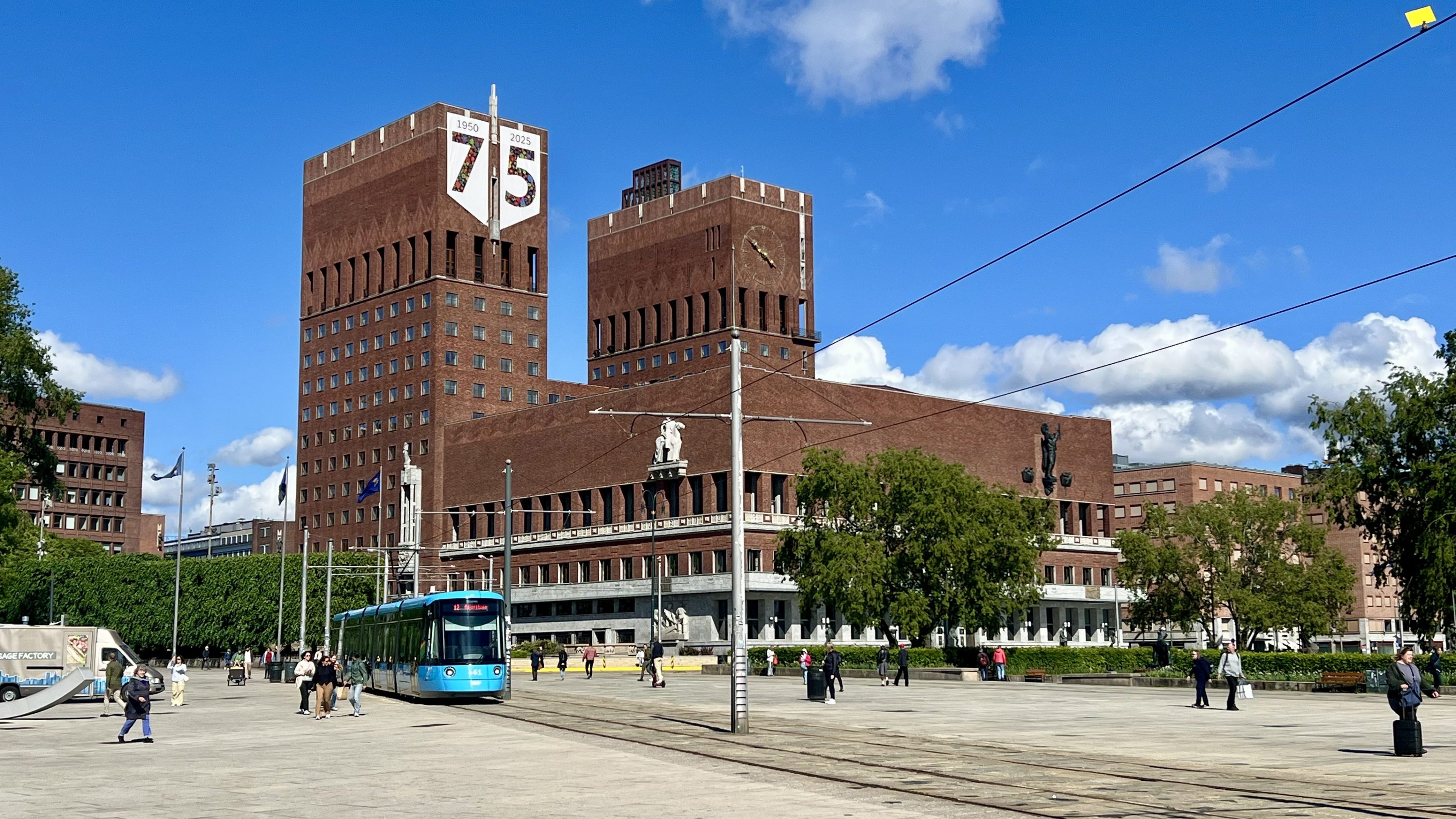
The City of Oslo’s Climate Budget is embedded into the municipality’s fiscal budget and aligns with the budget process throughout the year.
- Tekst: Guro Watten and Magnus Øgård
- Illustrasjon: Rikke Dahl Monsen
This process involves the municipal entities and takes place annually. The Climate Budgeting process is connected to each entity’s strategic plan, annual plan, and annual report. The municipality’s climate considerations and initiatives are included in this process.
Scroll down to learn more about the Climate Budgeting process.
The Climate Budgeting process involves all municipal entities. Here you can see the roles of the different actors in the Climate Budgeting process.
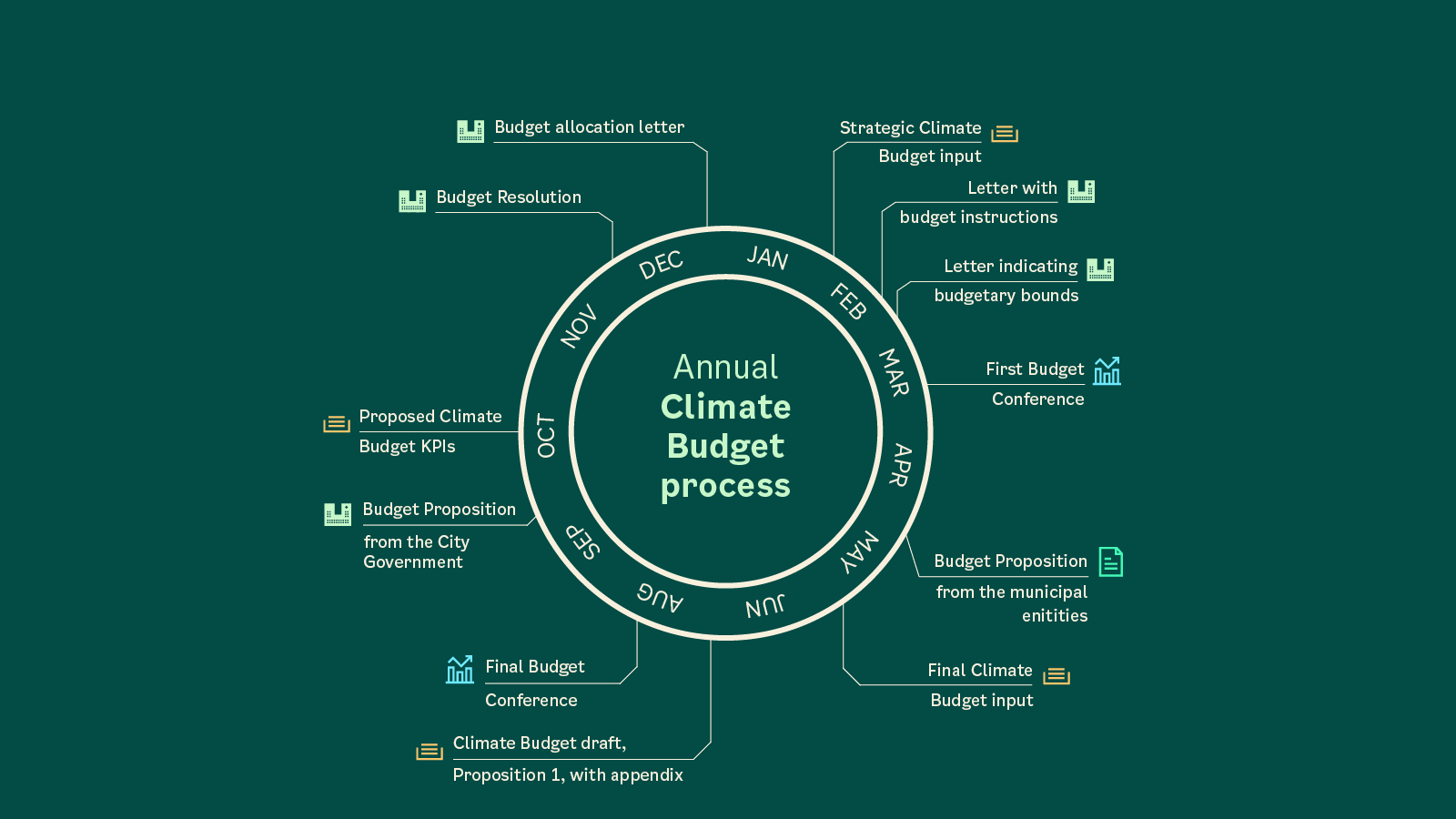
Let’s go through the annual Climate Budgeting cycle, step by step.
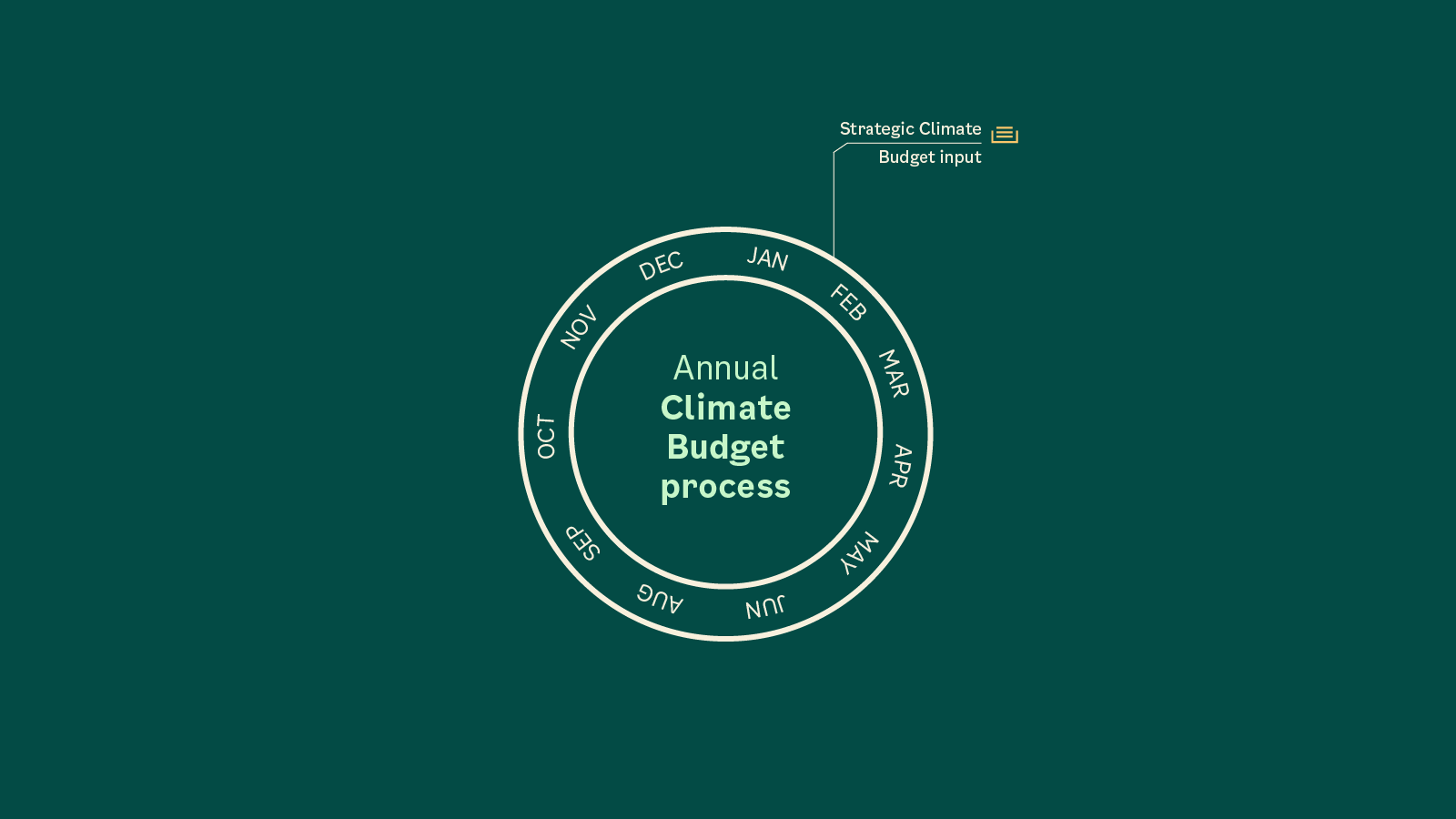
Strategic Climate Budget Input
The Climate Agency submits its first strategic input to the Department of Environment and Transport, as an input to the First Budget Conference.
The Climate Agency assesses what should be prioritized in the upcoming year, and in the annual Climate Budgeting cycle, initiating action to close the gap toward achieving Oslo’s Climate Goals of 2030. This includes recommendations for strengthening existing measures, introduction of new measures, and recommended climate-initiating actions.
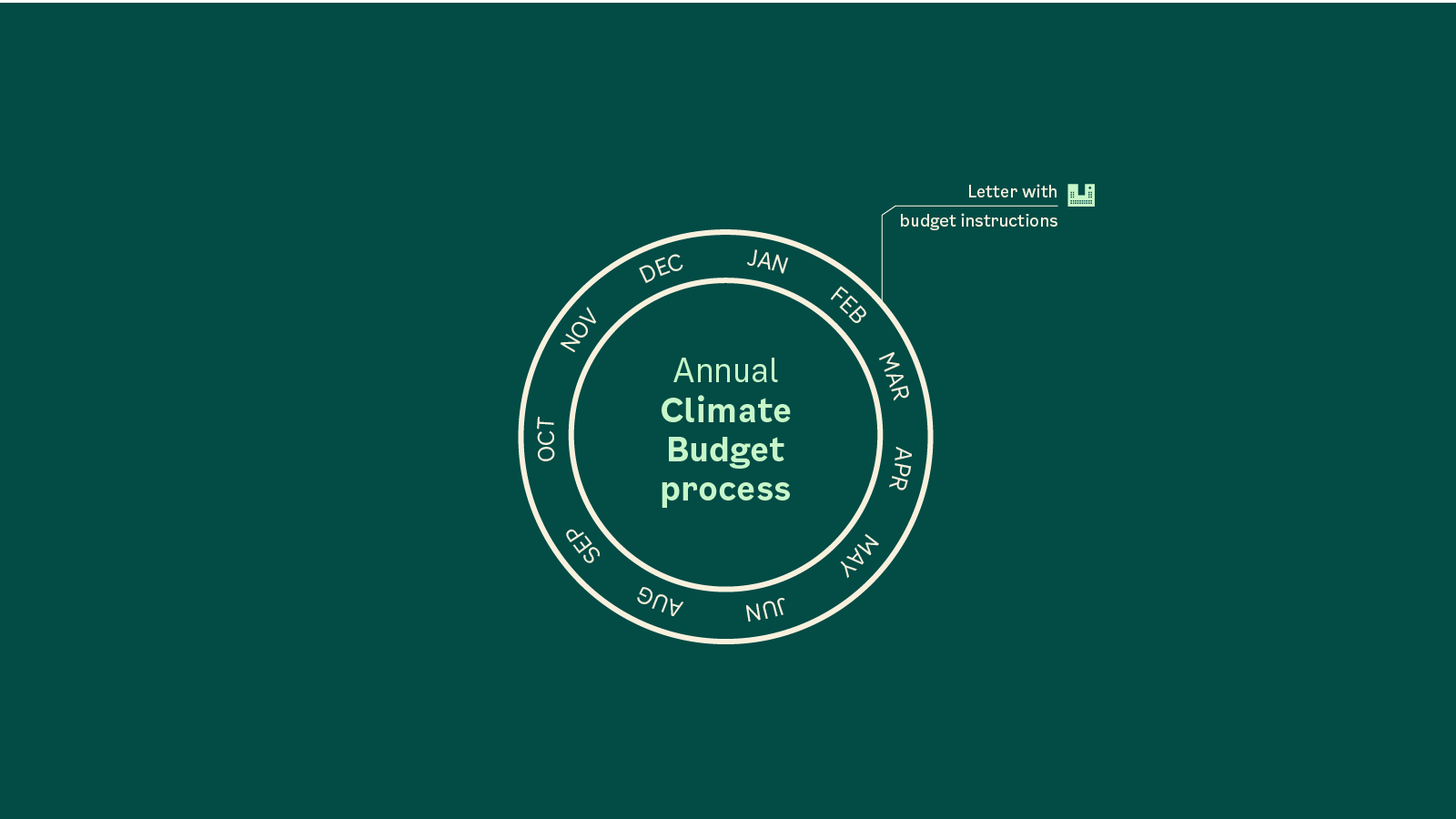
Letter with budget instructions
The City Government Departments delivers/distributes a letter with budget instructions to the municipal entities. The letter with budget instructions addresses framework and guidelines for priorities in upcoming year’s budget and financial plan, and climate actions are included as part of these guidelines.
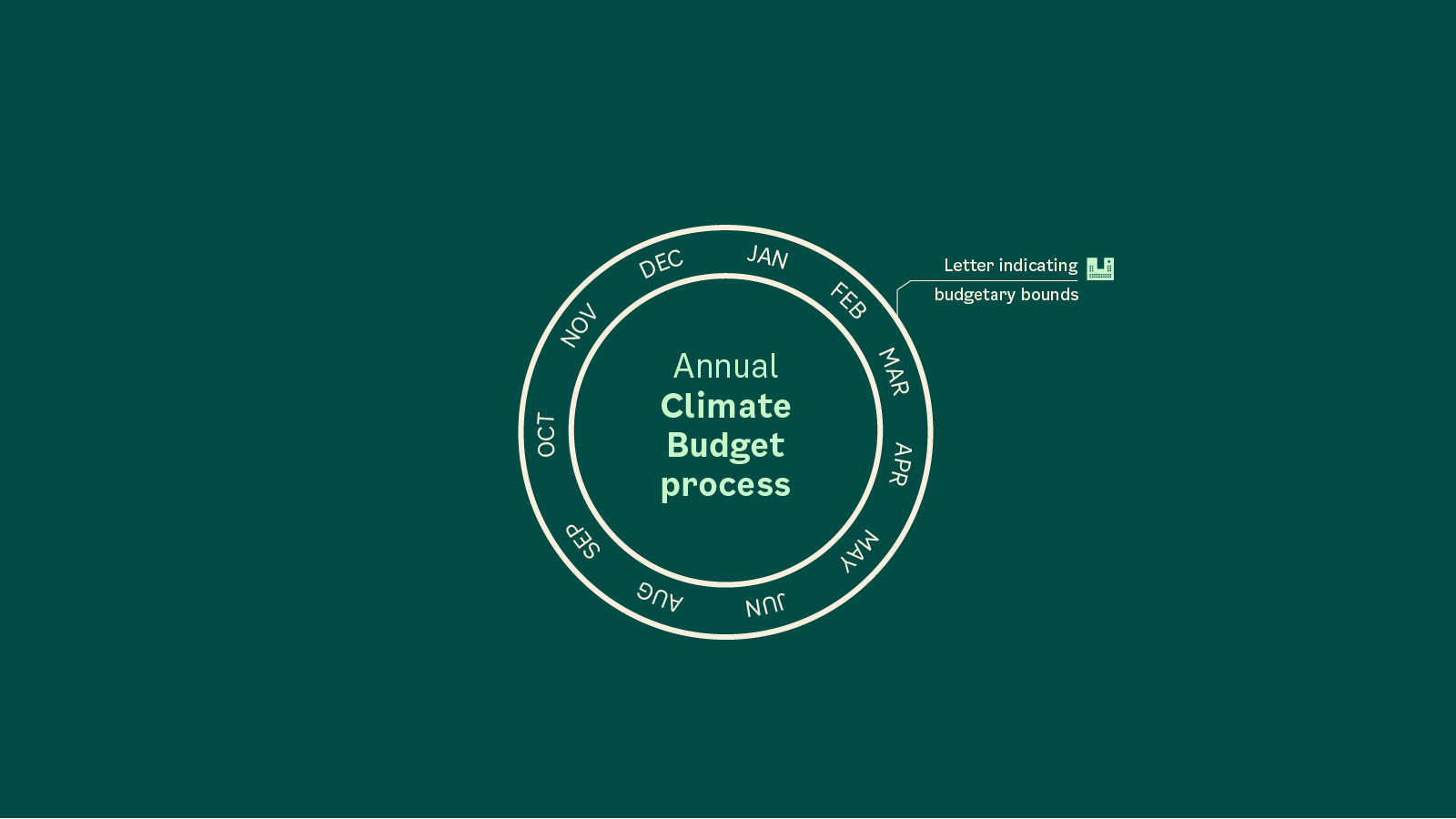
Letter indicating budgetary bounds
The City Government Departments delivers a letter to the entities, with information indicating initial budgetary bounds for their respective budgets (framework planning). The letters may also include verbal premises in/for the budget process (governance steer). Entities´ climate considerations and initiatives may be included as part of these verbal premises.
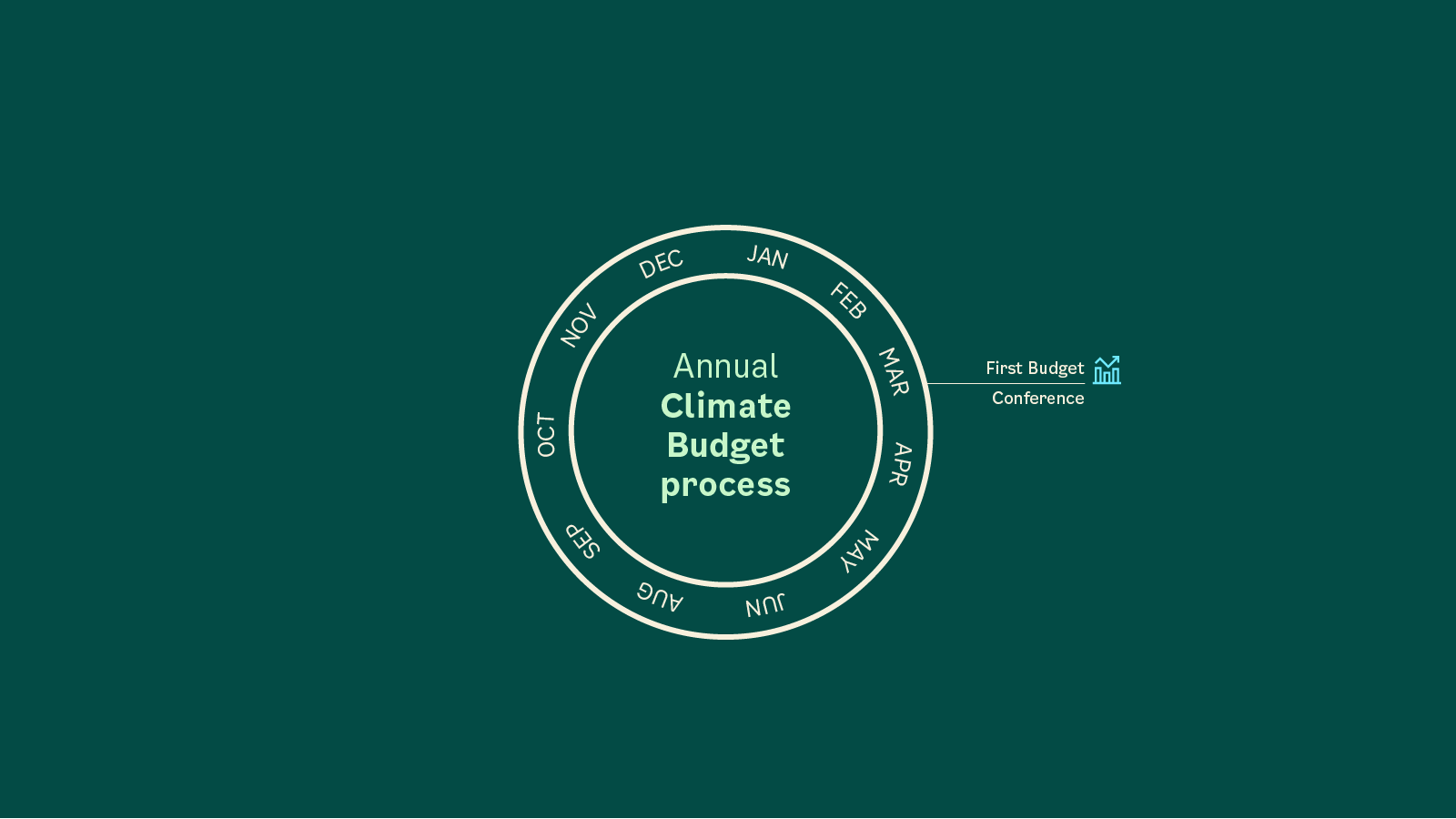
First Budget Conference
The City Government, in the First Budget Conference, addresses long-term challenges and priority areas for the upcoming four years (the four-year financial planning period). Key priorities are set, and the financial framework gets reviewed. The City Government makes decisions about further prioritized assessments in the budget process.
The Climate Agency’s first strategic input is included as part of the background material for considerations and priorities. The Department for Environment and Transport start discussions concerning the strategic background material, internally, and with other departments in the City Hall, in the period between reception of the strategic input and the First Budget Conference. As the decision-makers need the relevant background material to make priorities for upcoming year’s budget, at the First Budget Conference.
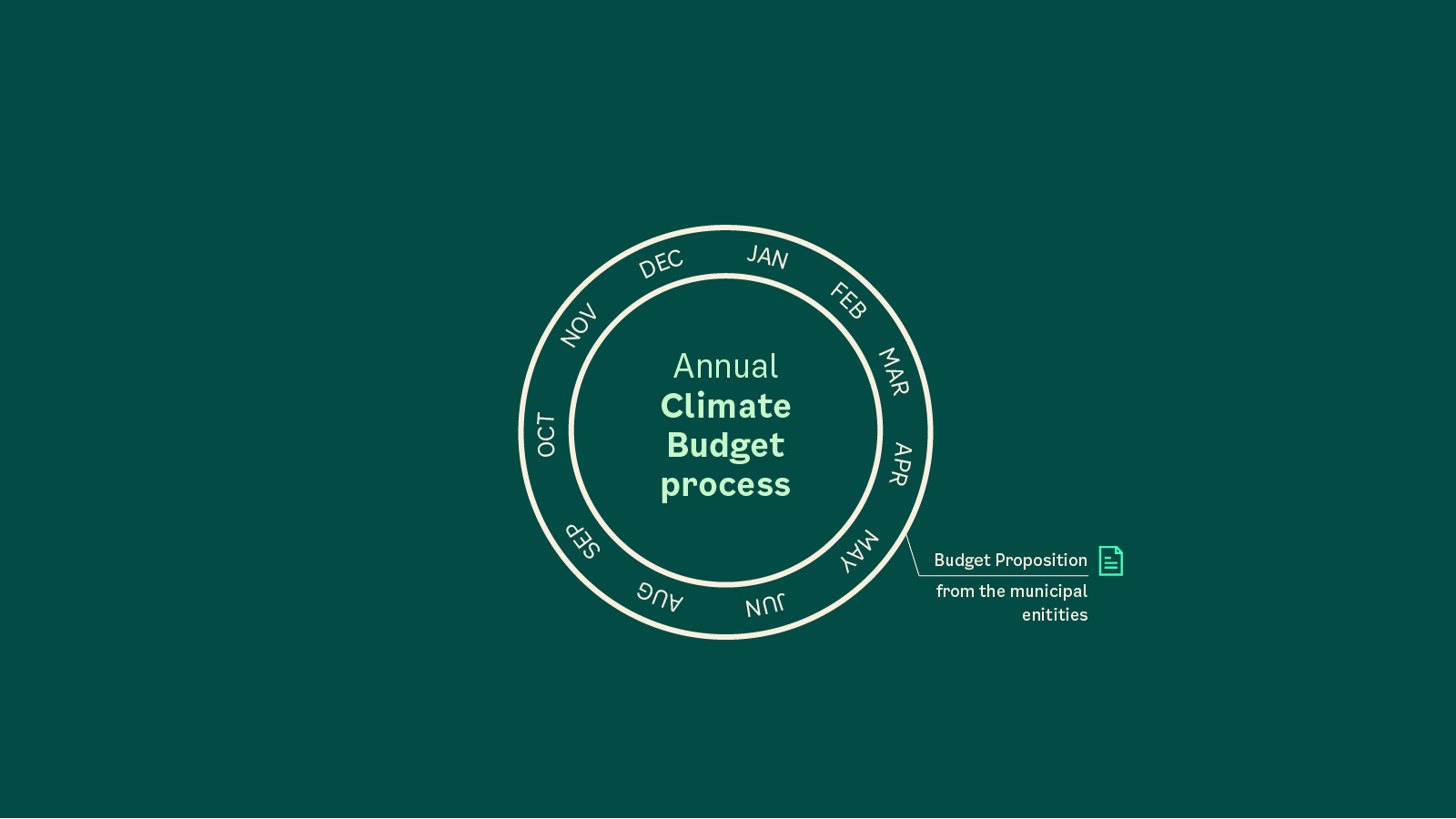
Budget Proposition from the municipal entities
The municipal entities submit their budget proposals for further assessments within/to the City Government Departments. The entities’ efforts to meet Oslo’s Climate Goals must be included, as described in the Letter with budget instructions and the Letter indicating budgetary bounds. The budget proposal may also include additional proposals—proposals for new allocations to fund initiatives that the entities are unable to carry out within the preliminary financial limits set in the Letter indicating budgetary bounds.
The entities’ budget proposals are included as background material for the Final Budget Conference.
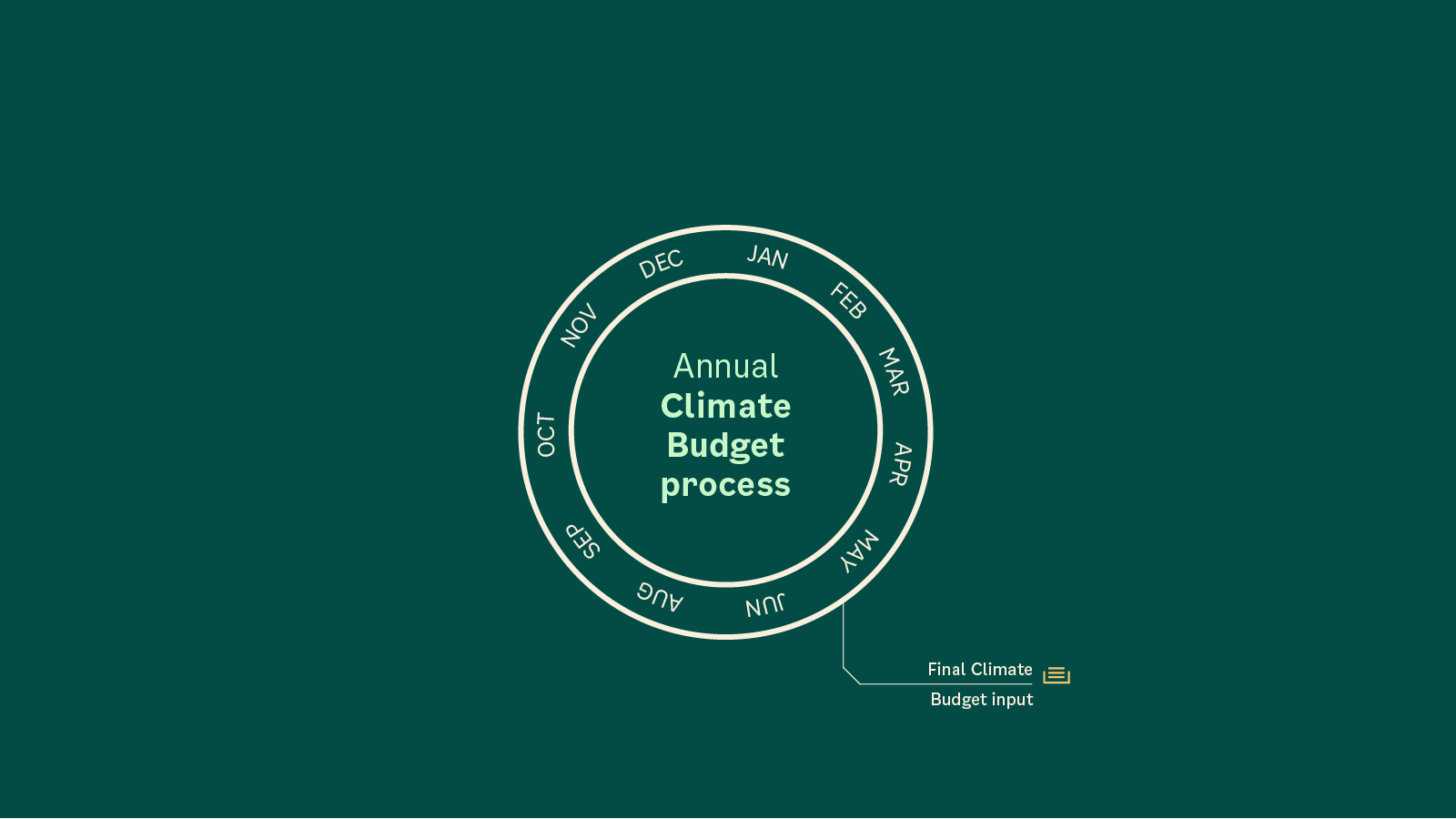
Final Climate Budget Input
With the Climate Agency’s Final Climate Budget Input, the first draft of the tables of measures is presented. This includes a table of adopted measures for all of Oslo’s Climate Goals towards 2030, with estimated climate effects where relevant, as well as assigned responsibility of implementation to relevant municipal entities.
An important part of the submission is that the Climate Agency prioritizes the entities’ additional proposals based on climate effect and impact. Additional proposals that are important for the municipality to achieve its climate goals are highlighted in a priority list. The Climate Agency shows how these proposals can be incorporated into the table of adopted measures, if they are approved.
The Final Climate Budget Input is included as background material for the Department of Environment and Transport’s considerations and proposals to the Final Budget conference.
Climate Budget draft, Proposition 1, with appendix
The Climate Agency is responsible for preparing the first draft of the Climate Budget, including written content, all tables of measures, and calculations. The draft is submitted to the Department of Environment and Transport, which is responsible for finalizing the Climate Budget before publication.
The Climate Agency is also responsible for preparing a technical appendix, which describes the methodology used in the Climate Budget. The first draft of the appendix is submitted to the Department of Environment and Transport at the same time as the Climate Budget draft, but the Climate Agency remains responsible for finalizing the appendix until it is published together with the Climate Budget.
There is close collaboration between the Climate Agency and the Department of Environment and Transport in finalizing the Climate Budget and appendix, and to ensure consistency across the documents.
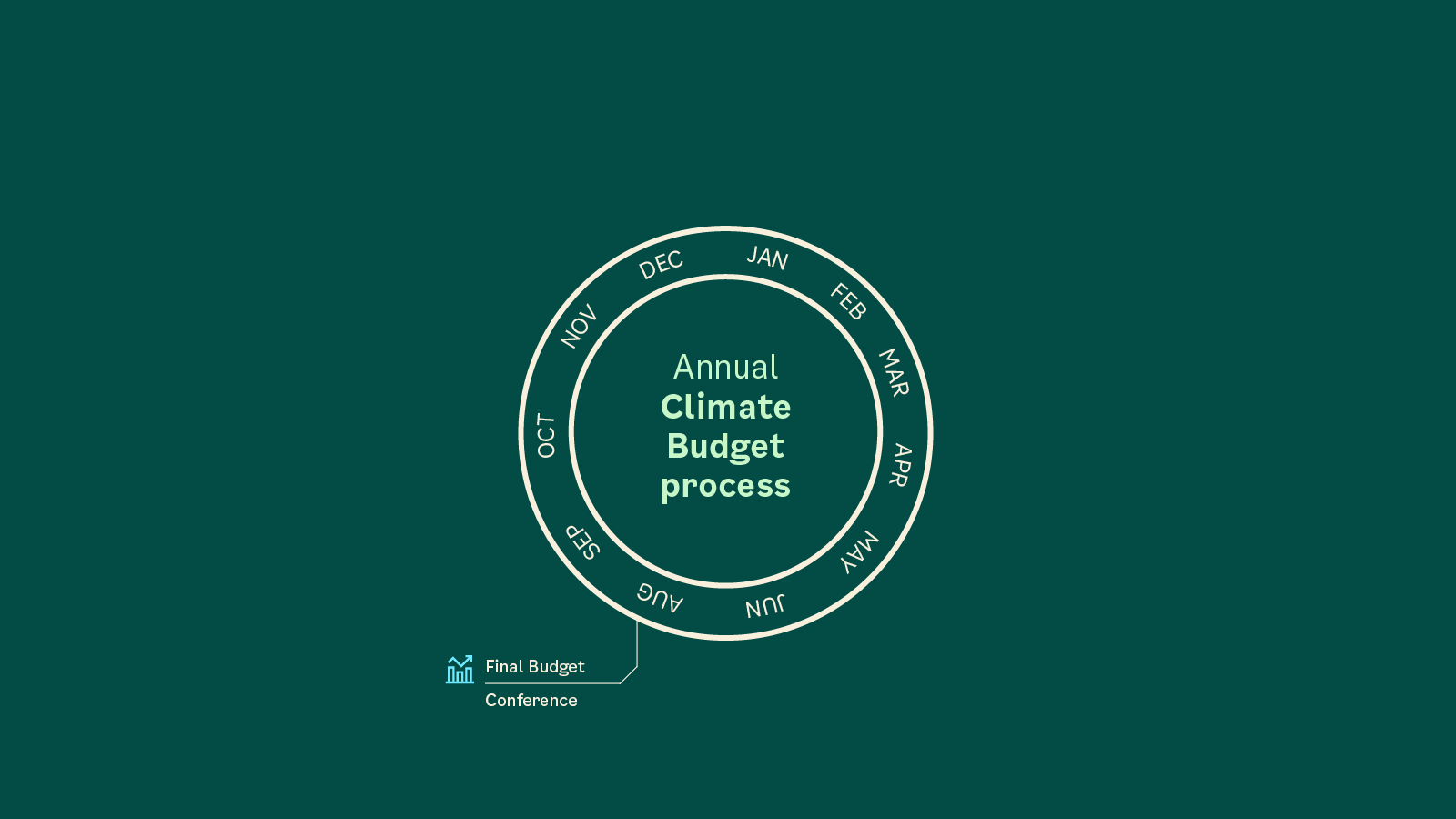
Final Budget Conference
At the Final Budget Conference, the City Government discusses selection of goals, strategies, and measures, along with the final balancing of the budget proposal. This also includes the Climate Budget. The entities’ budget proposals and the Climate Agency’s second input to the Climate Budget serve as background material for the City Government Departments, ahead of the conference.
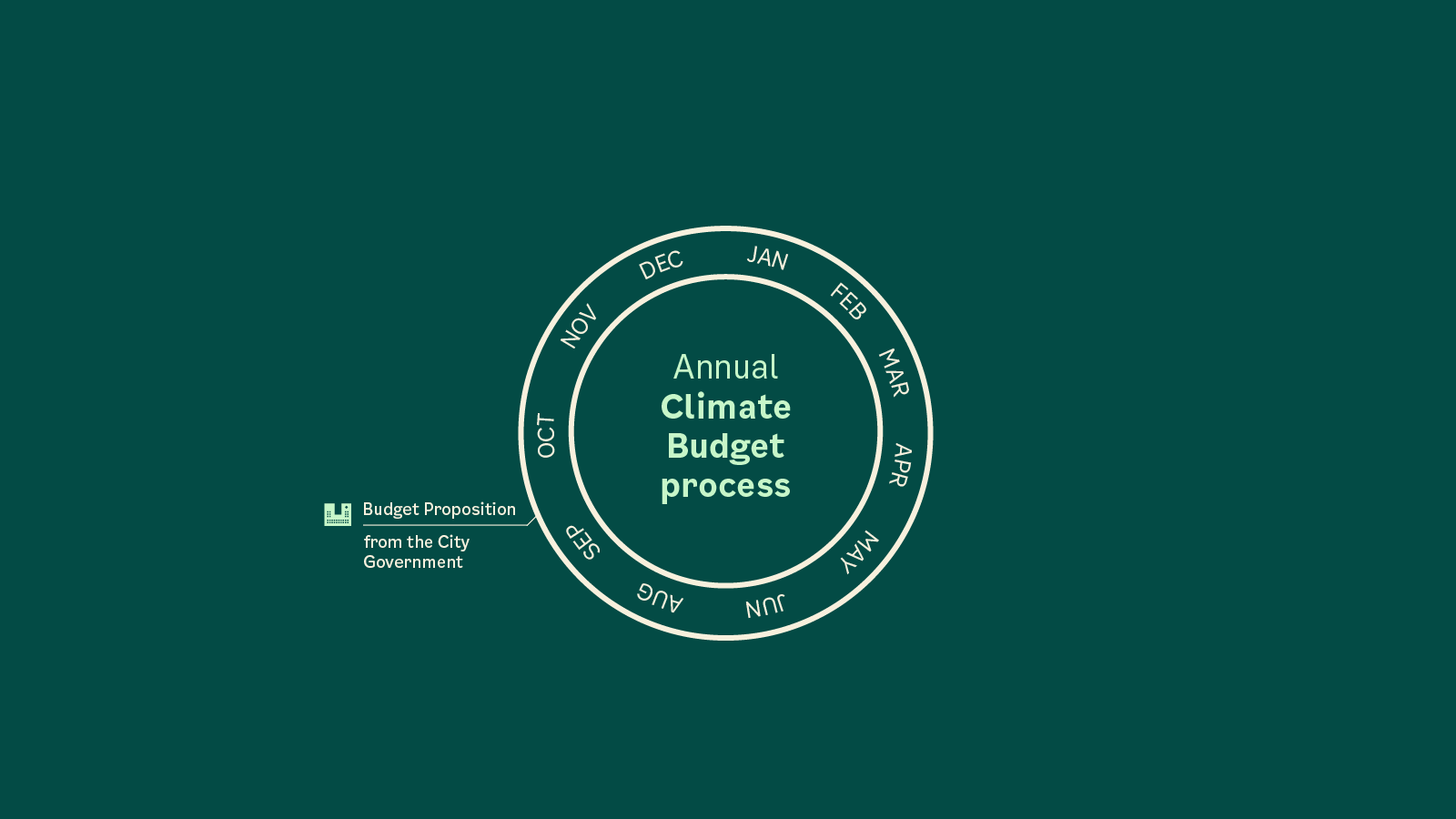
Budget Proposition from the City Government
The City Government’s Budget Proposition (Proposition 1) is made public. The Climate Budget is included as Chapter 2 of Proposition 1 and is therefore jointly processed with the Fiscal Budget. After the proposal is presented, the City Council may submit questions about the budget.
Here you can find the Climate Budget Proposition from the City Government including the appendix.
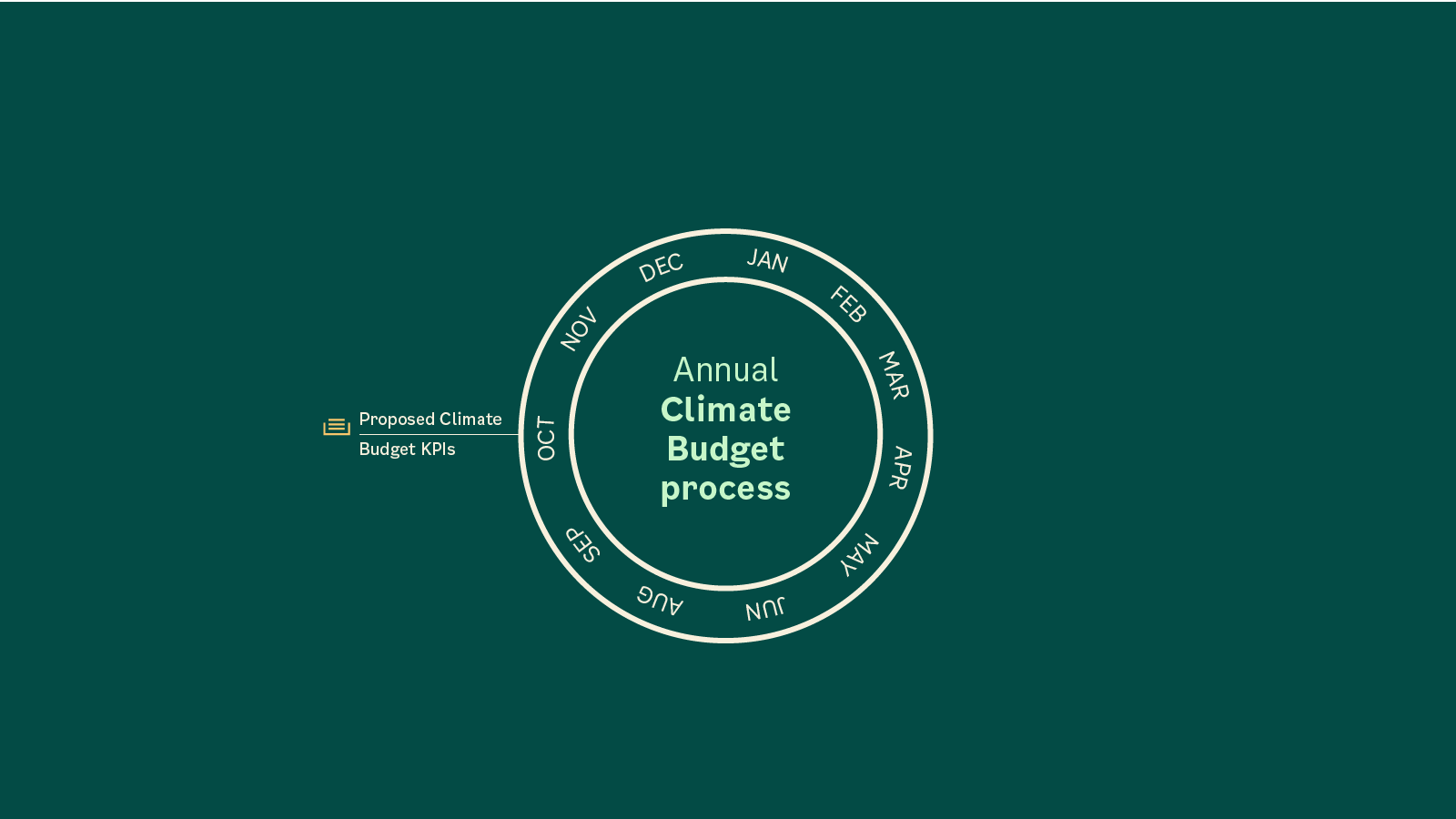
Proposed Climate Budget KPIs
The Climate Agency prepares a proposal for indicators to be used in reporting on the adopted measures, in the implementation of them, in the Climate Budget. This is a collaboration with the municipal entities which are responsible for implementing the measures.
The proposal is submitted to the Department of Environment and Transport, while the individual City Government Departments have the final decisions on the reporting indicators for their respective subordinate entities. The reporting indicators are included in the Budget allocation letters to the entities for the upcoming year and define what responsible entities are expected to report on. Target values are also set for the indicators for the budget year.
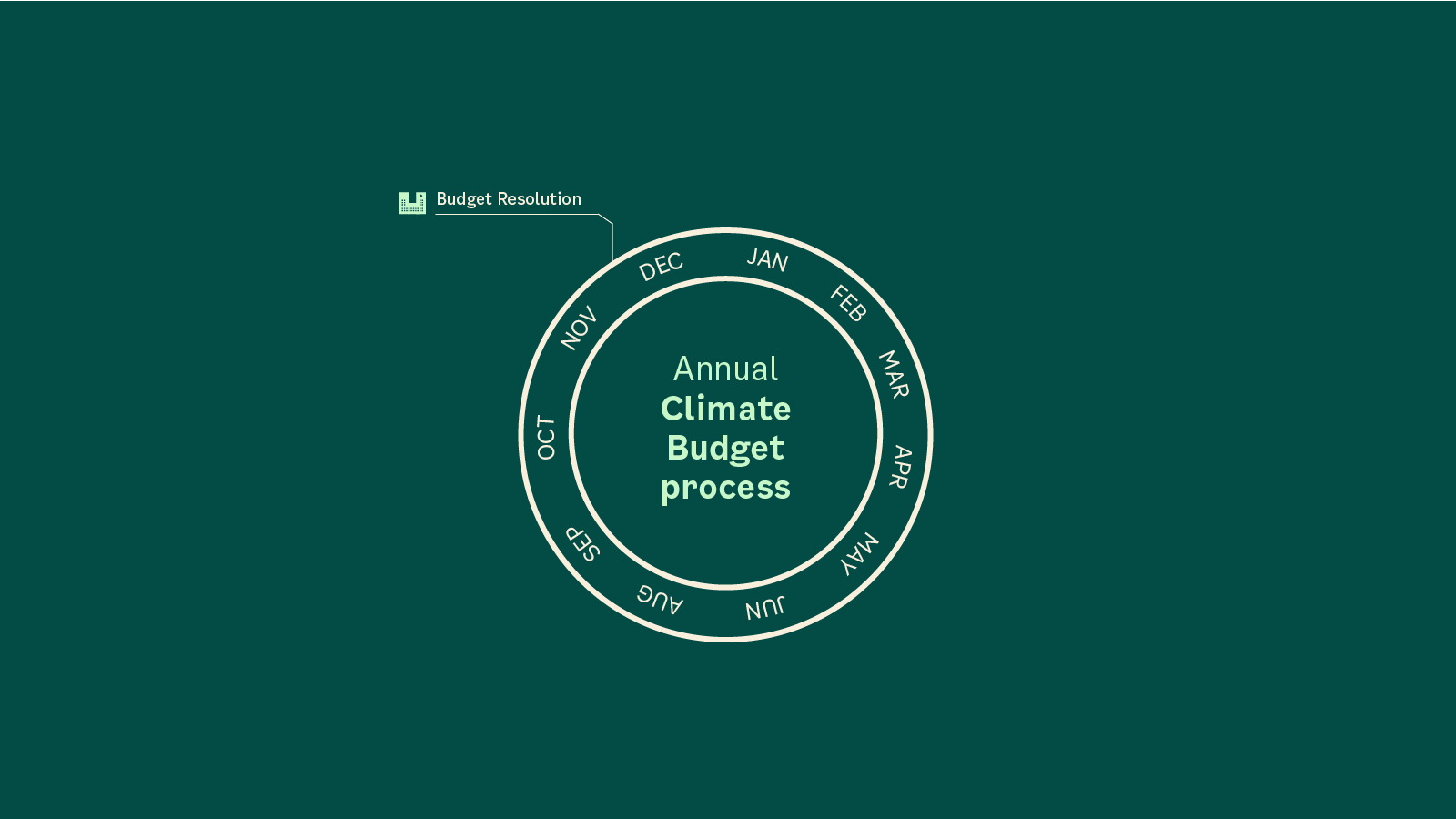
Budget Resolution
The City Council deliberates and adopts the budget. This final decision determines which measures will be included in the Climate Budget for the upcoming year.
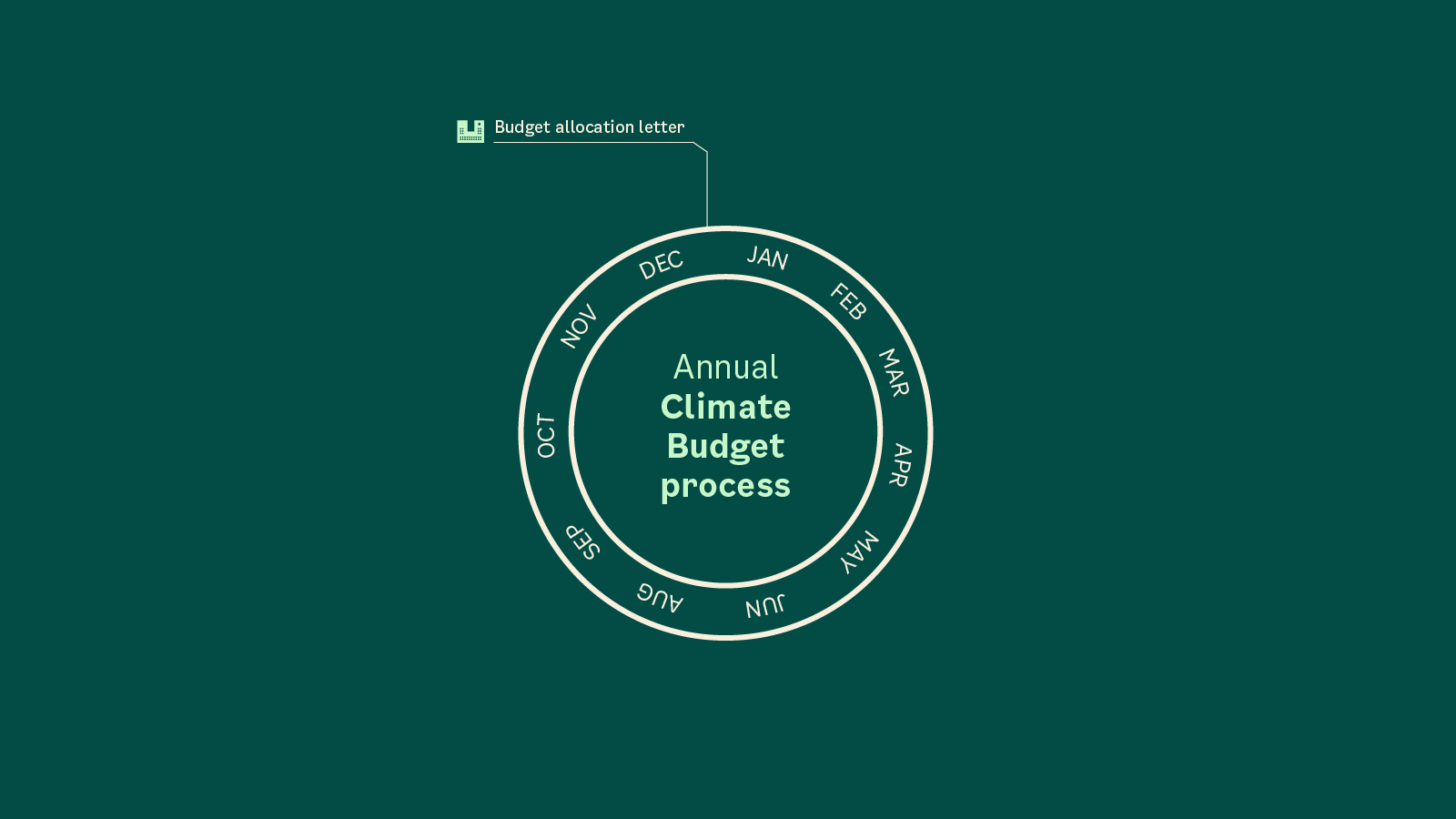
Budget allocation letter
Toward the end of the year, the City Government Departments distribute Budget allocation letters to their subordinate entities. This is part of the municipality’s overall governance dialogue. The allocation letter outlines the tasks the entities are expected to deliver in the upcoming year, including the measures in the Climate Budget, along with the associated reporting indicators, they are responsible for.
Next steps
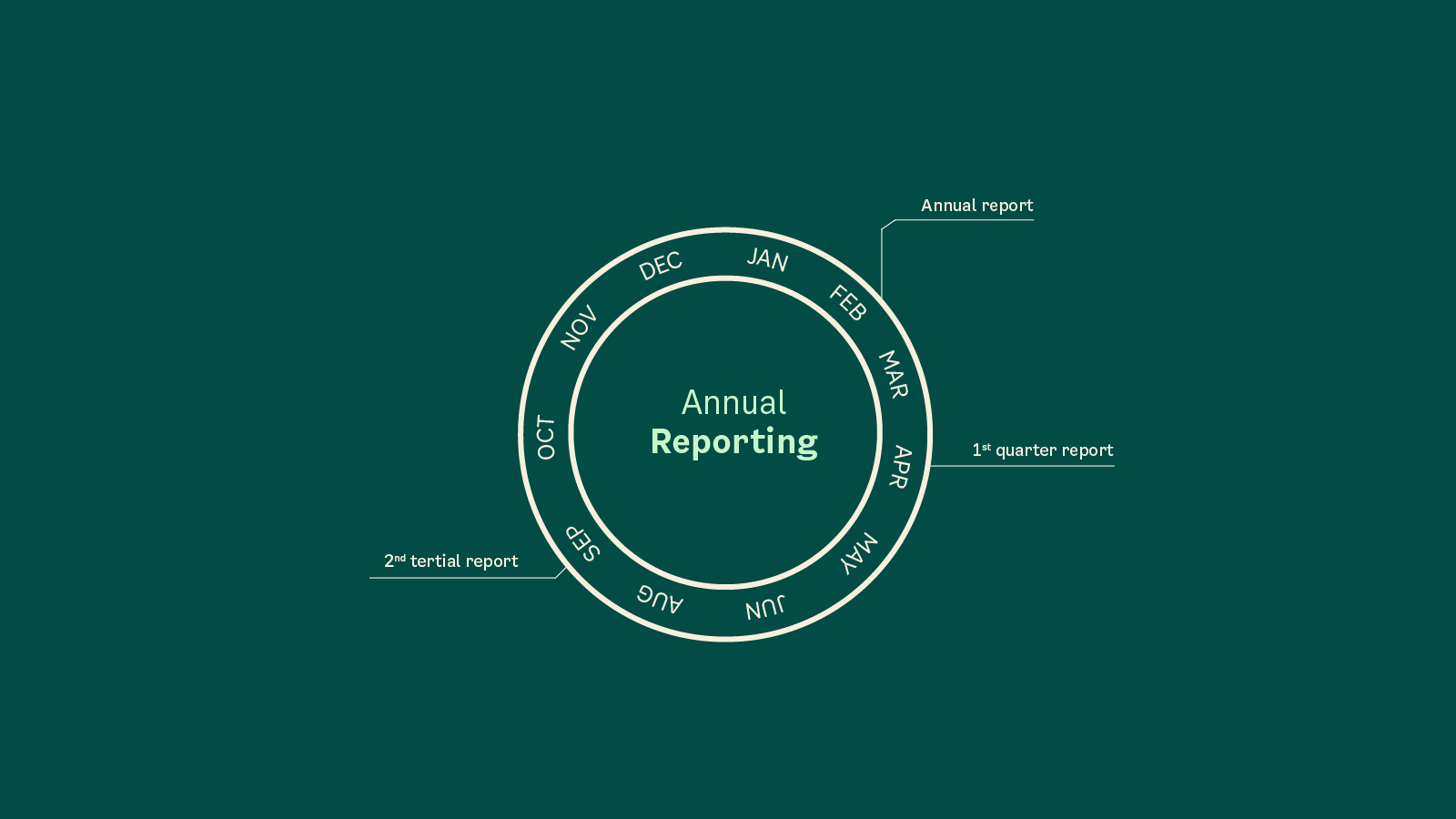
In the upcoming year, the entities initiate action aligned with what has been adopted in the Climate Budget and specified in their Budget allocation letter. The entities must report on the implementation status in line with the budget decision.
The Climate Agency compiles the entities’ climate reporting, identifies any deviations, and assesses progress toward Oslo’s Climate Goals towards 2030. This serves as background material for the City Government’s reporting to the City Council.
…meanwhile, the process of preparing the upcoming Climate Budget begins.
If you want to read more about how Climate Budgeting functions as a management tool for achieving climate goals, click here!