
Size: large
Type: image
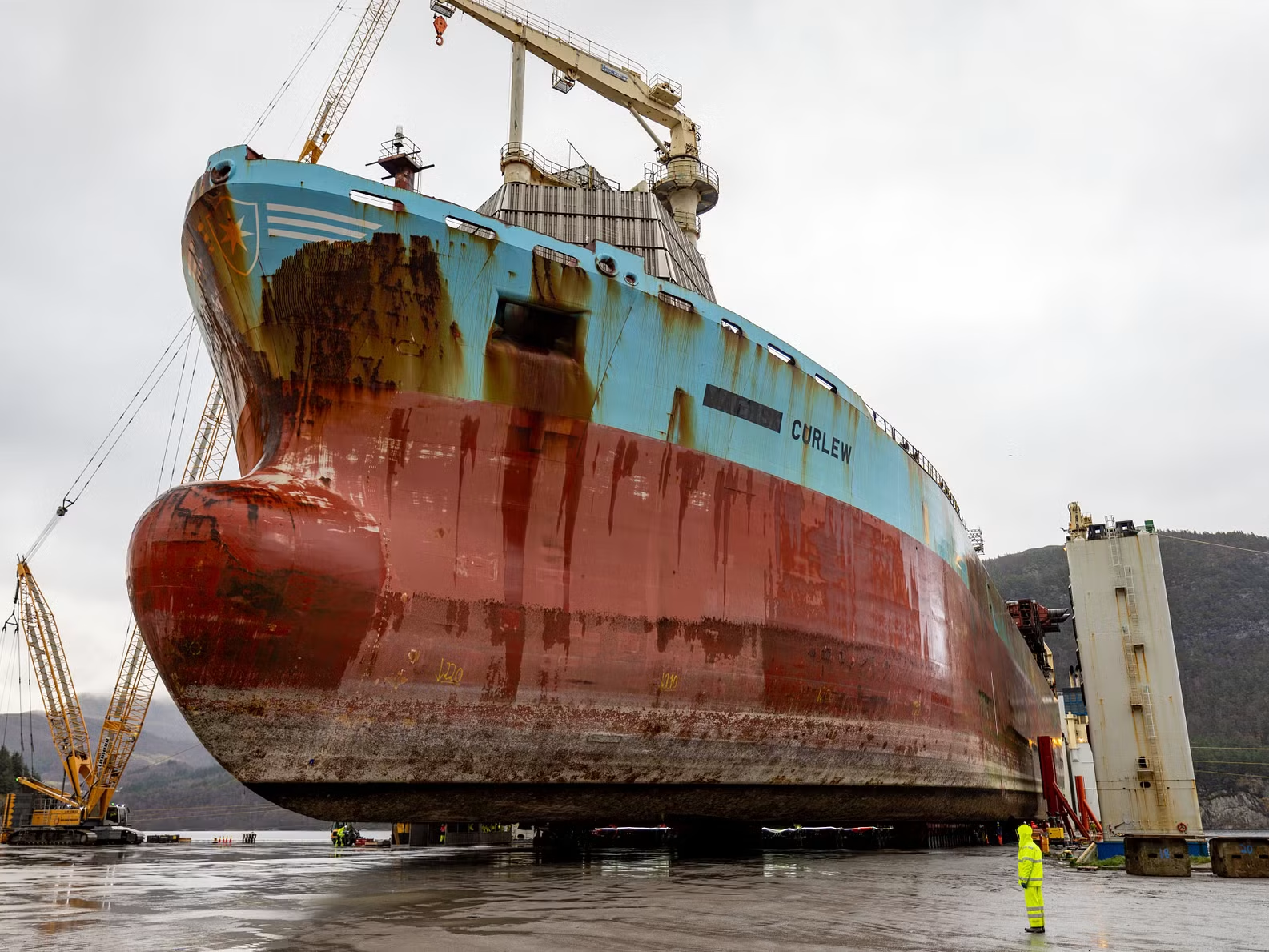
It’s a large-scale innovation as Løren Activity Park and Multipurpose Sports Hall rise in Oslo. As the first developer in the world to do so, the City of Oslo and Oslobygg KF have used steel from a shipwreck as a load-bearing structure in an active construction project.
The Curlew FPSO oil production ship operated in the North Sea for 20 years before it retired. Instead of dismanteling and melting in an energy-intensive recycling process, steel plates were cut from the hull, cleaned, and trimmed to the right dimensions. The steel from the ship is being reused, and the City of Oslo has cut greenhouse gas emissions by 90 percent compared to using new steel from the market.
-
- Multipurpose hall and activity park of 2,500 m² and 6,000 m², respectively
- Fossil-free construction site with extensive use of zero-emission construction machinery; from 2025 the project will be carried out as a zero-emission site
- In addition to being a pilot project for recycled steel, the Løren Activity Park and Multipurpose Hall will reuse concrete elements from Stig School on the façade
- Ambition to reduce greenhouse gas emissions from the new building by 40 percent compared to a reference building


Now the steel, with a few adjustments, has become new, climate-friendly steel beams in the building’s pergola.
“Many buildings have a large climate footprint. By using our construction projects to test new solutions, we help drive the development of reuse in the construction industry. We’re proud of that,” says Eli Grimsby, Director of Oslobygg KF.
When the construction industry accounts for 25 percent of Norway’s waste, there are big gains to be made by both reusing and repurposing materials in new projects.

Eli Grimsby, Director of Oslobygg KF, is pleased to have innovative, climate-friendly solutions in the building. Photo: Oslobygg KF
Nytt gammelt på Akershusstranda
On the pier just below Akershus Fortress, at Vippetangen, sits the over 100-year-old Warehouse 38. When it was built in 1915, the green building served as a storehouse for the America Line, and in 1987 it was converted into offices. It now houses the Port of Oslo’s administration.
The building was technically outdated and needed renewal. The ambition to reuse as much of the building materials as possible was high.

“We wanted the renovation to showcase the building’s history while using modern technology and energy-efficient solutions,” says Erling Jenssen, Section Manager for Development at Port of Oslo, who has followed the project from start to finish in various roles.

Erling Jenssen, Section Manager at Port of Oslo, says the environmental ambition was high when the listed Warehouse 38 was to be renovated. Photo: Hans Kristian Hagen Rise, Oslo Port Foto: Hans Kristian Hagen Rise, Oslo Havn
-
- Warehouse 38 is on the Cultural Heritage Management Office’s “yellow list” of protected buildings. The goal for the renovation was for both exterior and interior measures to help highlight the building’s origins as a warehouse.
- Renovation started in 2020 and was completed in 2022.
- 4,000 m² office building with around 160 workstations over four floors.
- High environmental ambitions alongside requirements for modern office solutions.
- Certified under the BREEAM-NOR environmental standard with the very high rating “Excellent.”
The Port of Oslo has a good reason to be proud of what they have achieved. Reuse of building materials has reduced greenhouse gas emissions by 171 tonnes CO₂ equivalent. But it hasn’t been entirely easy.
The building is on the Cultural Heritage Management Office’s yellow list as protected. Warehouse 38 became one of FutureBuilt’s model projects, which means at least 50% of existing building structures must be used again, and at least ten percent of the new components added to the building must be reused. This meant, among other things, calculating the weight of the building and recording the weight of most materials to be reused.
Materials that were reused included: insulation in the external wall across several floors, studs inside the external walls, the glulam load-bearing structure, insulation in the roof and the roof itself, gutters, and interior ceiling panels. They also sourced building elements from Rådhusbrygge 2, Kongshavnveien 28, and Nedre Skøyen vei 26, all slated for demolition. From these, they obtained items such as granite slabs, electrical cable ducts, and other interior timber.
With the building now complete, they can proudly say the energy-efficiency ambition has been realized. In the first year of operation, energy use for lighting, heating, and ventilation was reduced to 58% of the level before renovation.
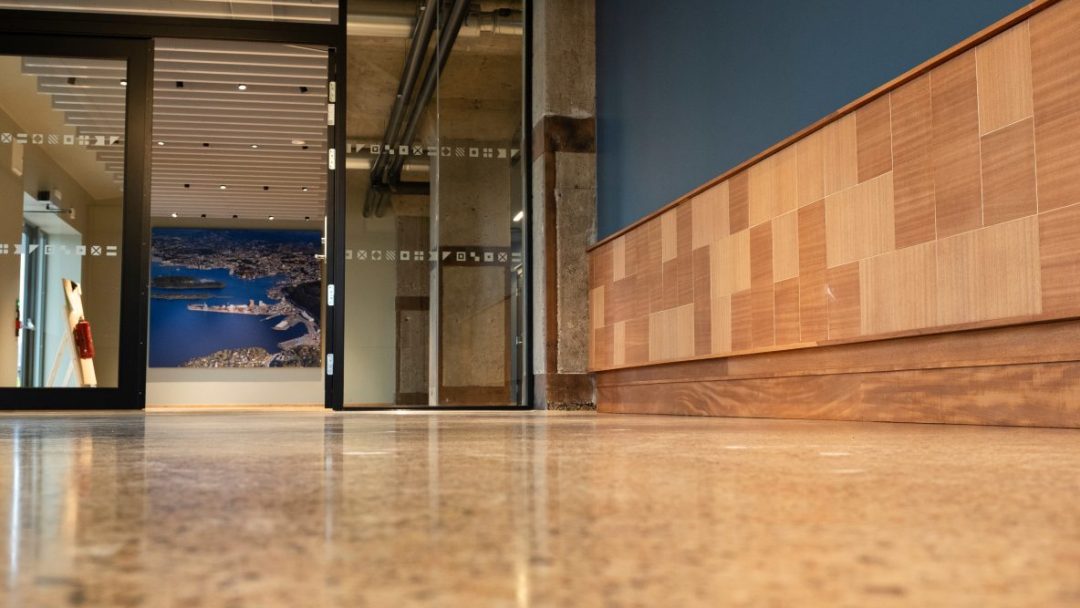
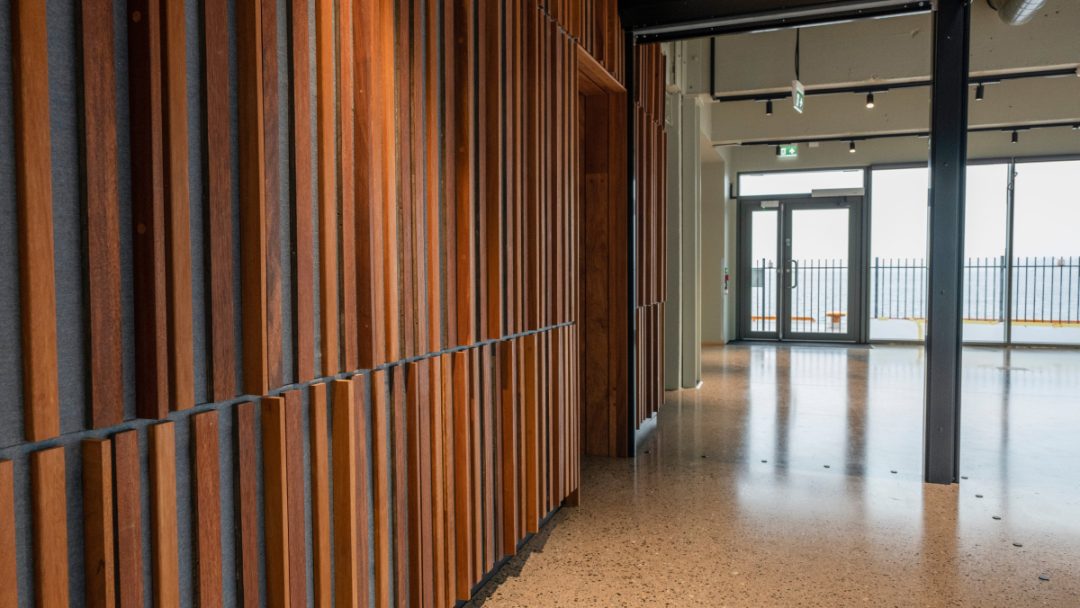
-
- In buildings with high energy efficiency, materials account for50 percent of the building’s climate footprint over its life cycle.
- Reuse of materials means a product is used again in its original form, and is therefore different from material recycling or re-manufacturing, which involves turning the materials in a product into a different product.
- Reuse extends a product’s life and reduces the need to extract new materials.
- Reuse can reduce environmental impact more than material recycling and is recommended when feasible.
- The construction and real estate sector accounts for around 25% of waste in Norway, 40% of which comes from demolished buildings.
- A large share of today’s “waste” can technically be used again—if it is surveyed, documented, and made available to those who will use it, according to the Green Building Alliance.
- Resources used again have 90-99% lower emissions than newly produced ones.
Old concrete as good as new
A lot of concrete is required for new buildings, but what happens to the concrete when buildings are demolished?
When the new Oslo Emergency Room was to be built at Aker Hospital, the ambition to reuse building materials was also high. They saved substantial greenhouse gas emissions by using concrete elements from the Government Quarter.
Oslo Emergency Room is a passive house and achieved the second highest certification level in the BREEAM system, namely “Excellent,” when the building was completed in 2023. By reusing hollow core slabs from the Government Quarter, they achieved about 90 percent lower greenhouse gas emissions than if new slabs had been produced. Norwegian Standard has developed a standard that covers the process from disassembly to condition assessment of hollow-core slabs, so that quality can be documented in the same way as for new slabs.

Hollow-core slabs from the Government Quarter were reused when the Oslo Emergency Room was built. Photo: Oslobygg KF Foto: Oslobygg KF
Stone by stone
While hollow-core slabs are a more “invisible” form of reuse for the public, everyone entering the reception area can see how stone has been reused from other construction projects.
In the reception floor, stone has been cut into 30 × 30 cm pieces and cast together like a giant terrazzo. This is surplus material from the National Museum that would otherwise likely have been discarded.
Oslo Emergency Room includes, among other things, a 5-day inpatient unit, 100 examination and treatment stations, and radiology diagnostic rooms.

-
- The Oslo Emergency Room consists of 26,000 m² of new building; technical infrastructure has been re-routed, roads upgraded, and a parking garage built.
- Strong focus on reuse, including stone from the National Museum, granite offcuts from Vika Terrasse, and hollow-core slabs from the Government Quarter.
- The building is a passive house, and the construction site was fossil-free. Solar panels are installed on the roof.
- The new emergency building was erected on the site of the old Aker Hospital, with a building footprint of 5,200 m².
This story was originally published in Norwegian, January 2025